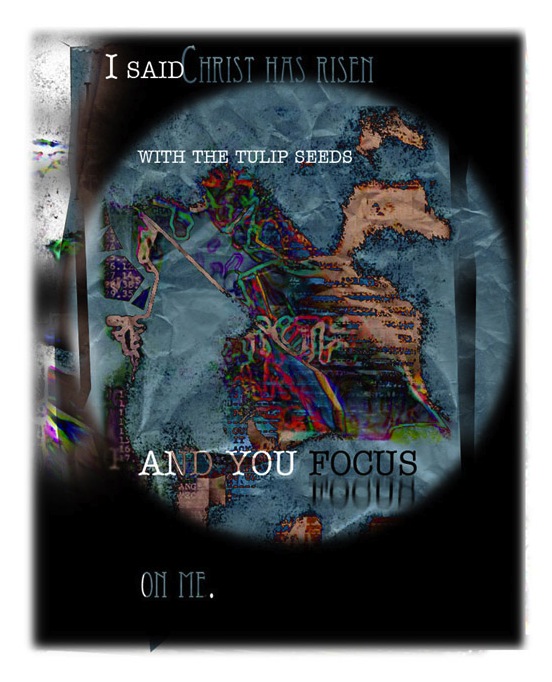
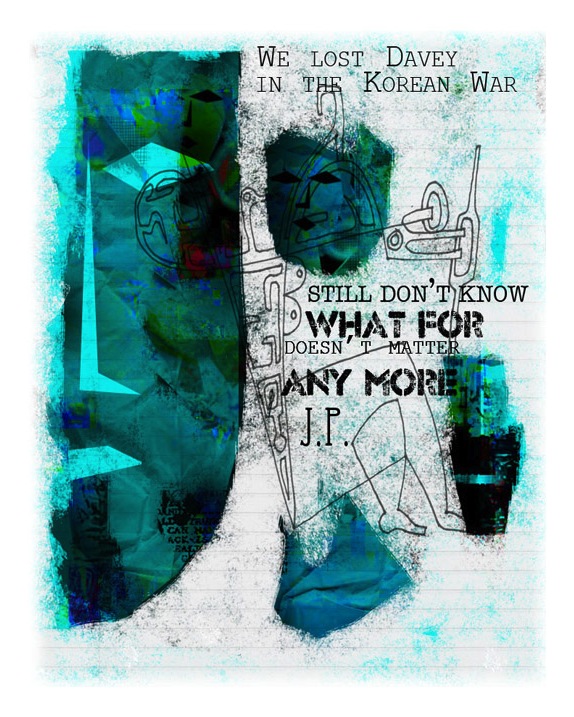
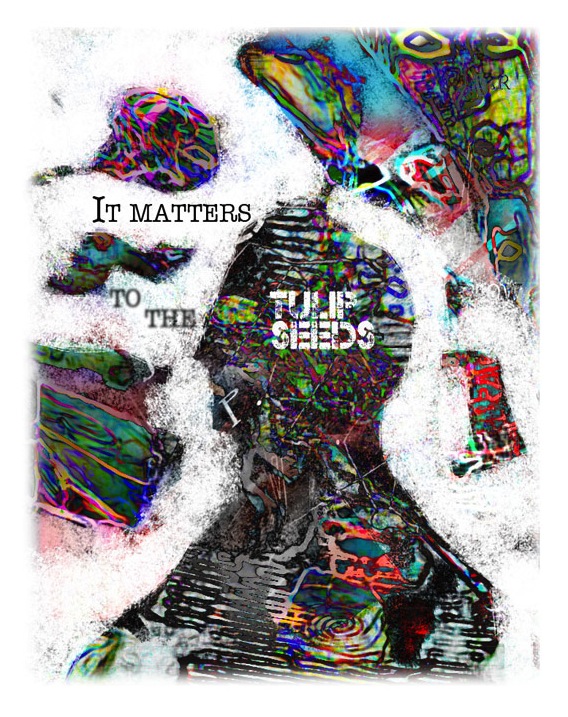
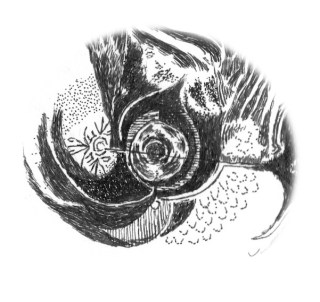
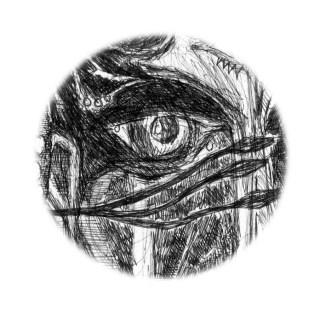
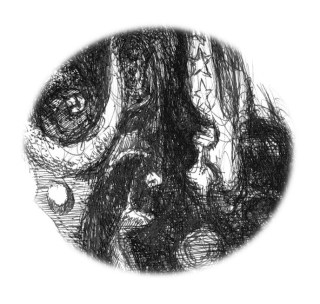
poemimage

The visual & the poetic.

Category: Drawing

GIF Experiments: 22 (The Charge of the Light Brigade)

Although the title in the GIF looks like a book and the GIF looks like a book trailer it’s not. However I created poetic text after the fact.

*

The Light Brigade

As in

Let There Be Light.

Witness

The mechanics of charging light.

Witness traction activate

Clouds of unknowing known

As muscled determination.

The mechanical opposite to A sucker born every minute.

Touch your tongue to the tent of your mouth. Announce

Charge

Pronounce light

As in

Let There Be Light.

*

Notes on the GIF: Intimations of Runic script transform into curvilinear vegetal design indicating a charging beast. It happened visually by itself (so to speak) during the design process.

Finding ‘his’ footing. Gaining traction. The irony of a ‘massive’ beast doing double-duty as charging light. Charging like flashlight beams in a force field? Surely he is not disembodied.

This GIF ponders our pressing situation, universal as it is, and the question of something, anything, out of the blue in reply.

*
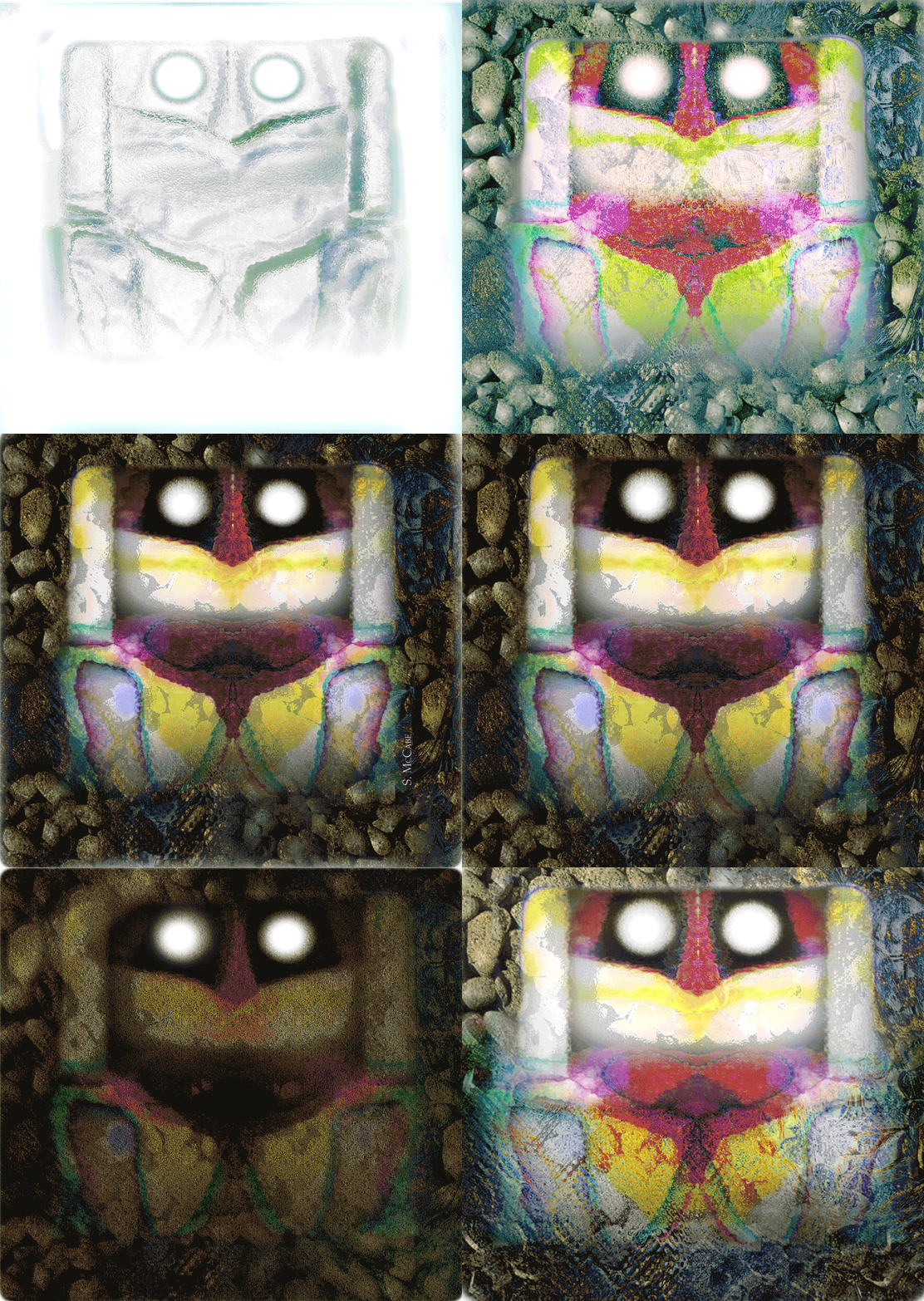
GIF Experiments: 20 (World’s Greatest Guard Dog)

The ‘Guard Dog’ above is absurd on an obvious level. He’s clearly a harmless creature not a guard dog. Yet he is the World’s Greatest Guard Dog. Absurd. Or maybe the treasure he is guarding only needs a tiny woof and it will hide itself. I don’t know – maybe. I like to think the DADA artists might have smiled upon this little guy expected to be, or pretended to be, fierce. I’ve read they enjoyed the anarchic chaos of Keystone Cops movies and, of course, the genius of Charlie Chaplin. John Heartfield and the DADA artists created not only wildly inventive and incisive commentaries on war – war profiteering – and class privilege but did so with scathing absurdist humour. Heartfield lived in a dangerous time. His artistic satire put him in great danger.

https://en.wikipedia.org/wiki/John_Heartfield

1/10 complete by one unit of measurement

I purchased a 33′ roll of Italian paper substantial enough to receive water-based materials: ink, gouache, watercolour, aquapasta medium and water-soluble graphite. The idea is to work in sections and following each section to pause, reflect on the work, and cross-reference it to what I believe to be relevant source material.

GIF Experiments: 17 (Line Drawings + a Song Title by Van Morrison)

.

Language in a Landscape

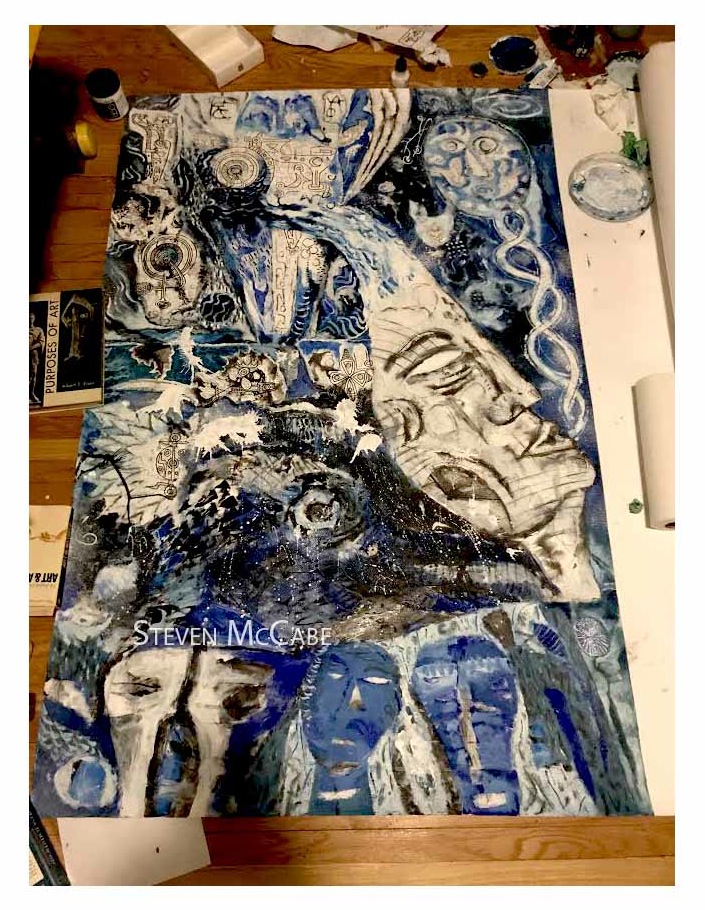
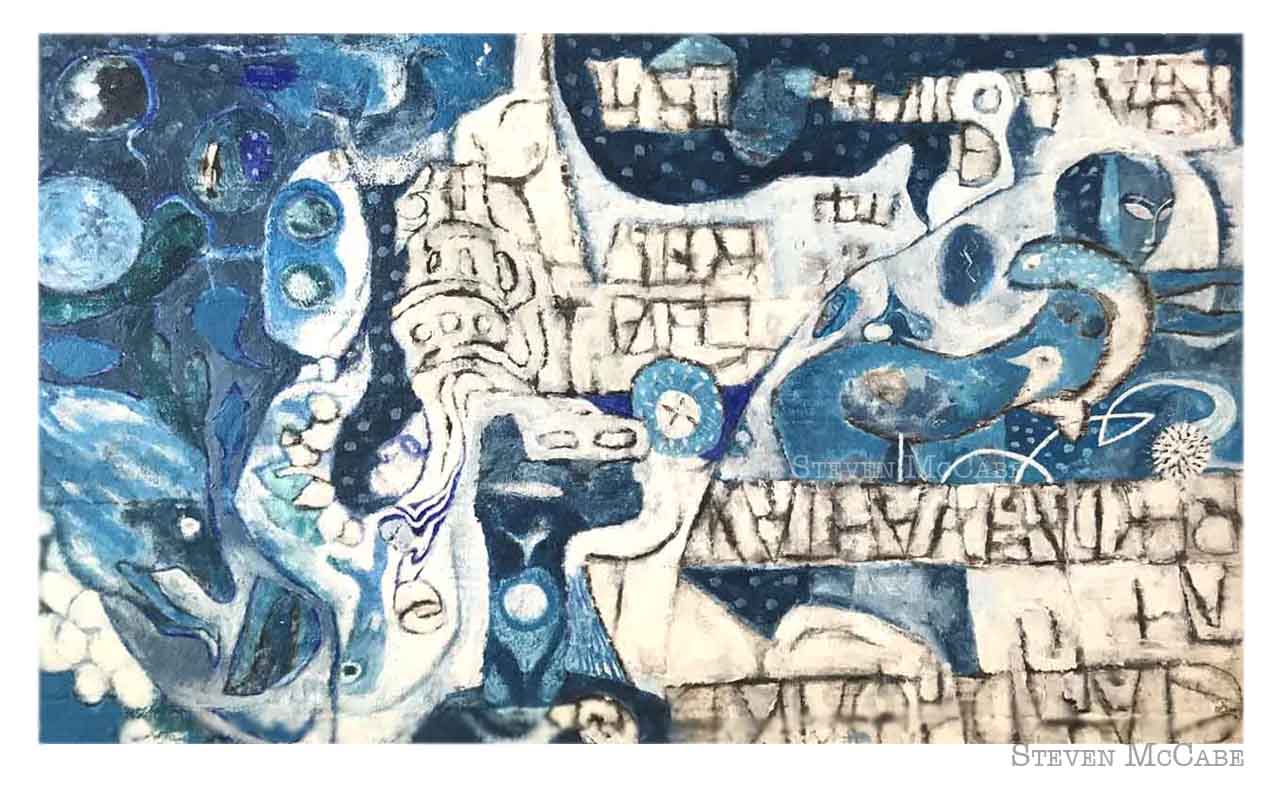
One of the images I used for a backdrop in Zoom during my virtual poetry reading at The Art Bar Poetry Reading Series on April 6th. During the first lockdown I painted this 18″ X 28.5″ work (acrylic & water-soluble graphic pencil on cardboard) while exploring concepts of lost text and mystery languages. My reading (video filmed and edited by Charles Hackbarth) can be found @ https://www.facebook.com/groups/artbarpoetry/permalink/10165105586530503/

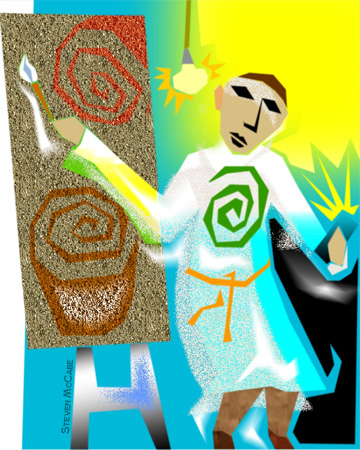
In my computer floating freely I found a digital file of (shall we say) cartoonish ‘Druid-monk’ images. He’s working beneath a light bulb (of course) and creating an icon of spirals. One is a cauldron-spiral. Perhaps I was thinking of manuscript illumination.

Then I found an ink drawing/collage from my (rather dark) 2011 exhibition at Propeller Centre for the Visual Arts in Toronto.

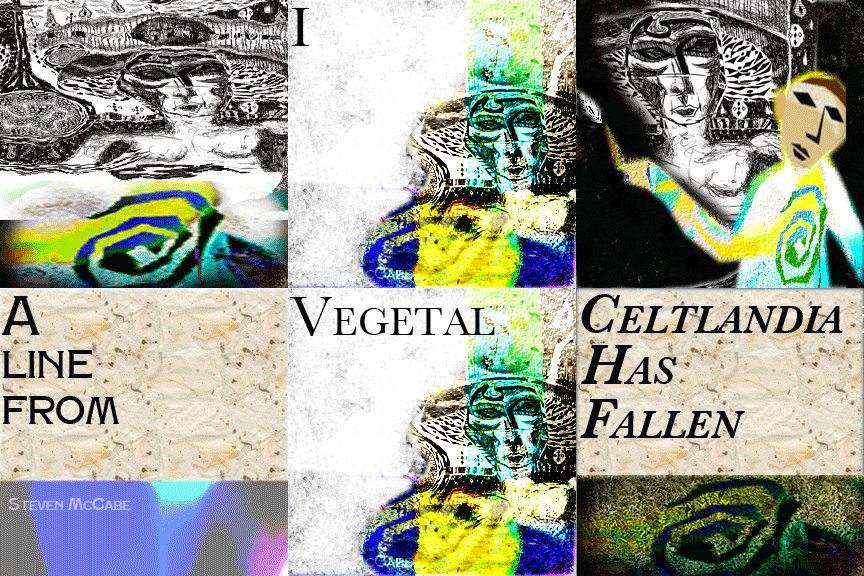
After combining them in Photoshop I was going to call the series ‘Temptation at the Manuscript Factory’ – humour inspired by a miniature I’d created many moons ago for an art gallery and gallery owner (both gone) who annually held an International Exhibition of Miniature Art. Instead I worked with a line from my unpublished poem Celtlandia Has Fallen.

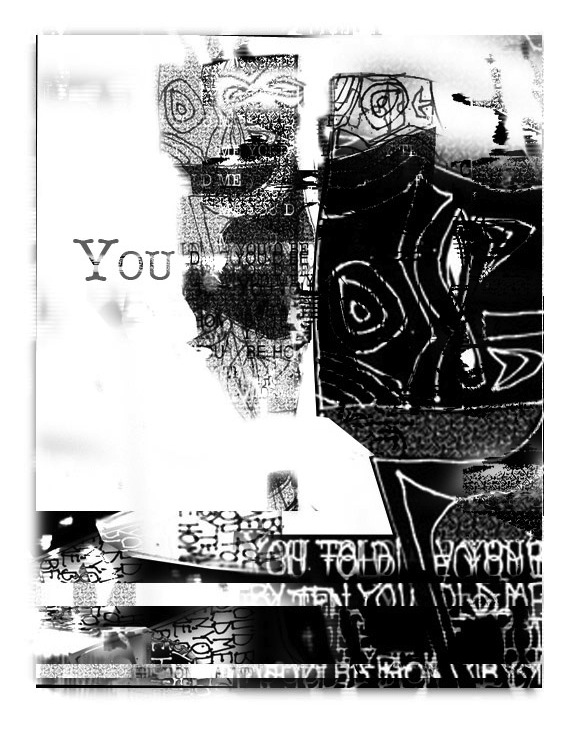
GIF1
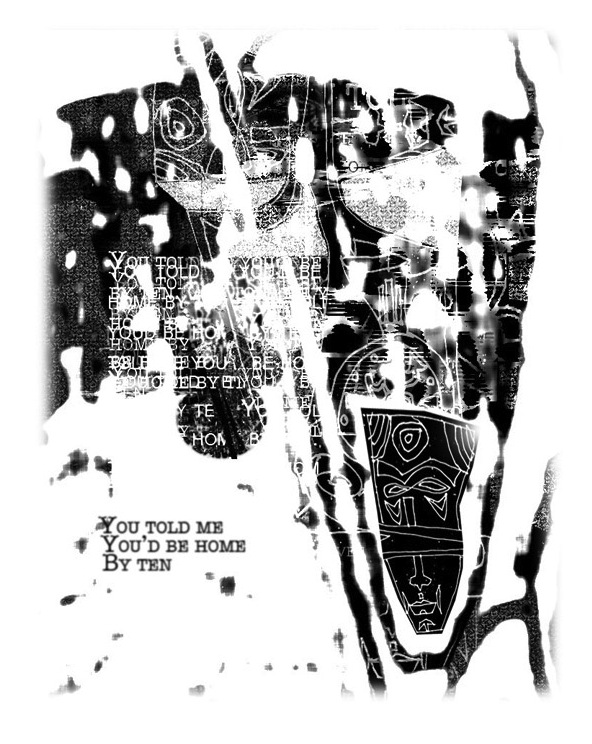
GIF2

Celtlandia Has Fallen is a sort of a quest poem, inspired by ancestral yearnings. There is something in the DNA stirring. In the Continuous Vegetal Style I served her. I don’t remember this, but in the poem ‘I’ do.

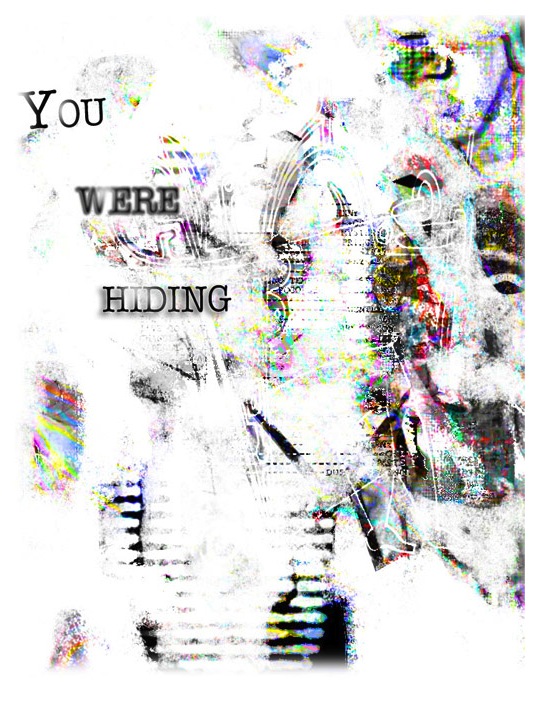
GIF3
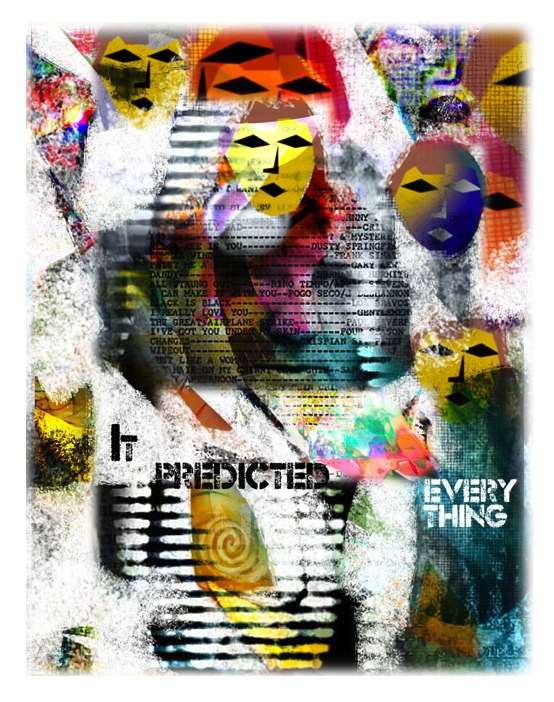
GIF4


You Told Me You’d Be Home By Ten

Original

It Predicted Everything

In the Temple of the Cauldron of the Garden of the Sun

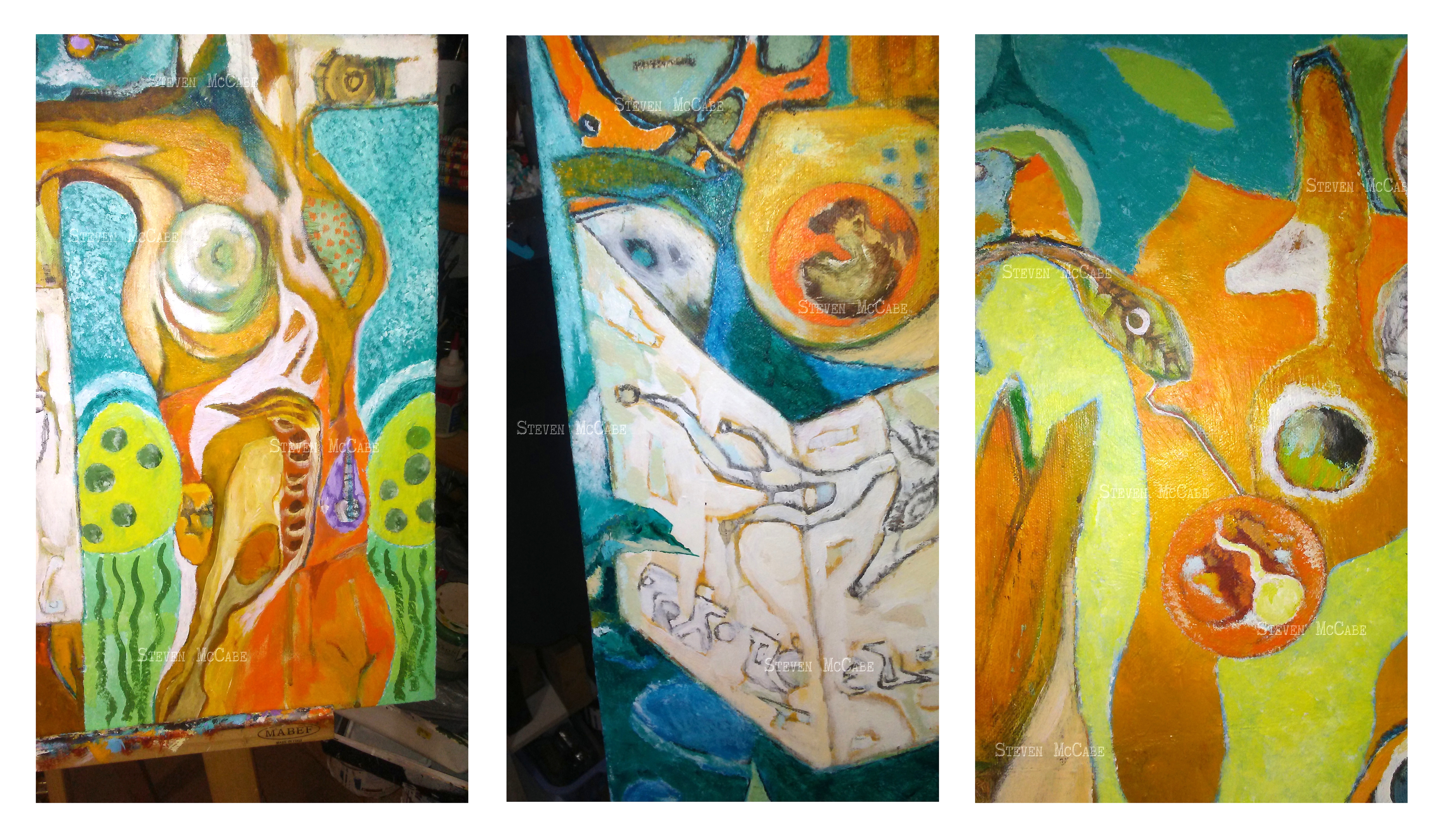
I did a new painting. With acrylic paint and water-soluble graphite. The size is 30″ X 30″. The day after it was finished I made three changes.

Working the woman’s body it became a tree body with a bird. To break up the vertical line of the cartouche I added a bird (looks like a blue jay) entering from the left. To delineate the ‘leaf-flower’ zapping the tadpole-comet-sperm sphere with its tongue I gave it a serpent’s eye, added a white line to the tongue and reworked the sphere.

A friend of mine from Romania refers to the accordion book above as a ‘cartouche.’ I feel like an archeologist discussing the cartouche in my painting. This cartouche contains a number of diagonals that lead the eye to her arm. The white of the cartouche jumps from her arm to the white of her face.

These photos are not professional quality but they do show decisions about content and composition.

In ‘real life’ the painting is not quite as turquoise but it’s also more vibrant with texture and depth. It shines brilliantly.

I will return to a regular posting schedule on this blog soon. My plan is to create linocut prints and small paintings on paper to go with poetry. My computer is slow now, older, and not syncing well with WordPress. I will put Photoshop files on a thumb drive to increase computing power.


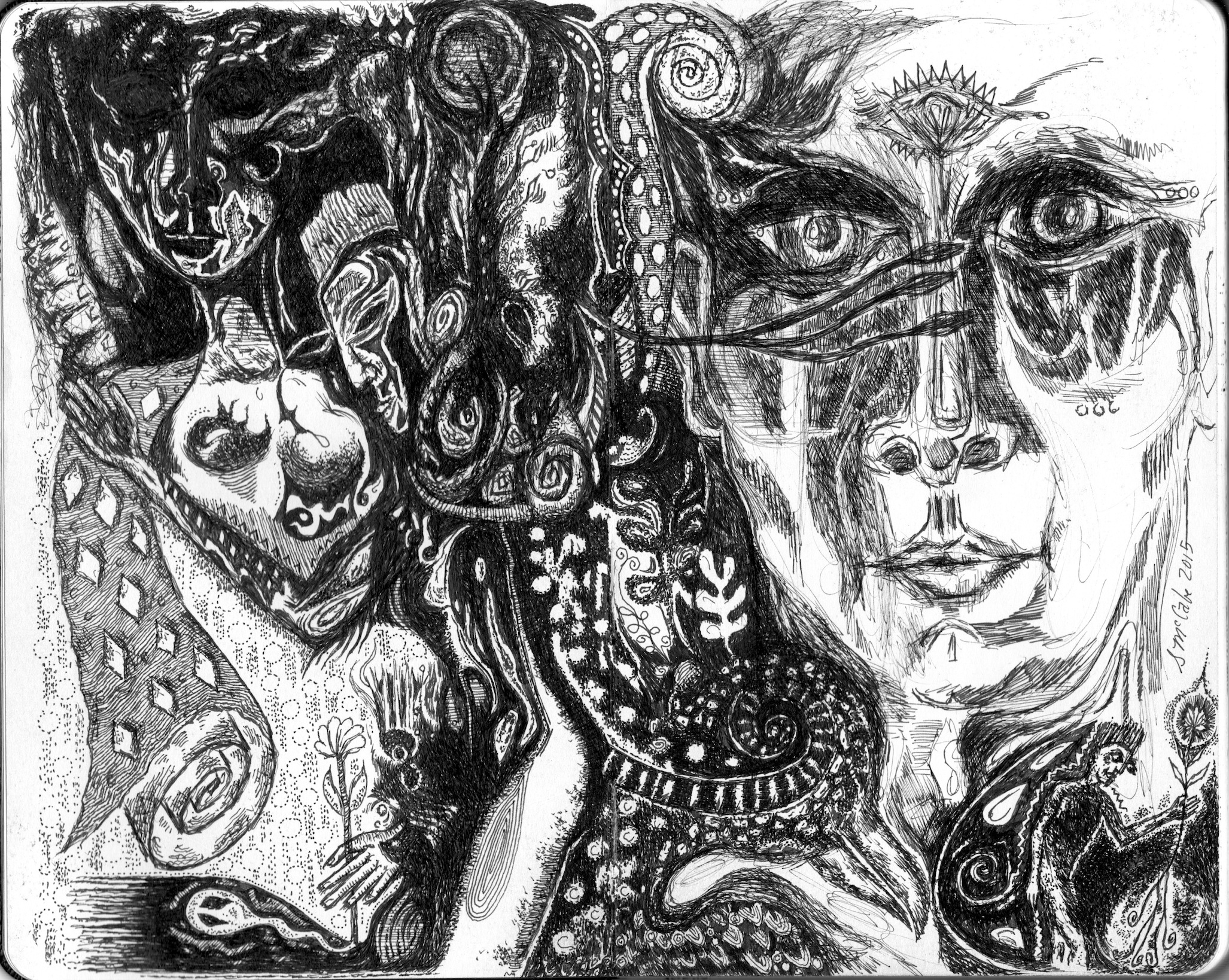
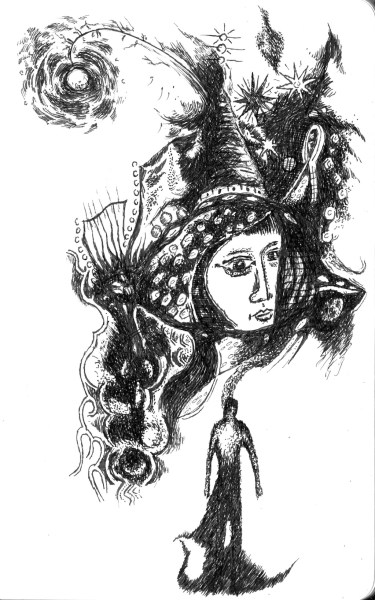
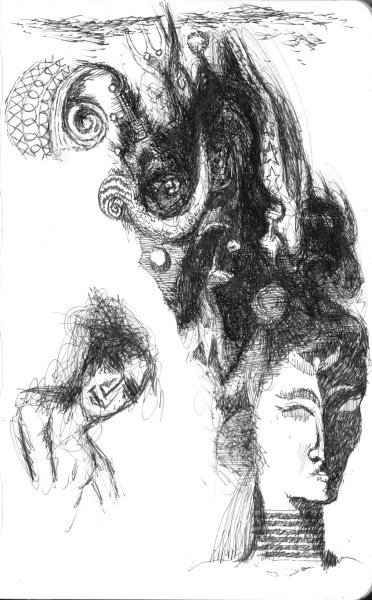
I sent five ink drawings to a poet.

For the cover of her book with a theme – dreams, running throughout the powerful, prophetic poems.

I selected the drawings from two sketchbooks filling simultaneously, slowly, sometimes on the subway, sometimes in a cafe.

I work in these sketchbooks, as well as accordion sketchbooks, on and off, sometimes obsessively & intricately,  sometimes less so.

I love ink drawing and the history of ink drawings – the contrast of line, design. To be honest I don’t want to do ink drawings, it’s inescapable & too pleasurable. An addiction of sorts.

My early heroes were Aubrey Beardsley and later Jan Toorop.

Today I find myself mesmerized by the line of Pict or Runic art and the heavier B&W contrasts in lino & woodcuts.

I have a book from the early 1900s & the author is railing against modernity in ink drawings.

He’s right about traditional, technical skill but quite misses the point.

The quest to return to what was lost in our origins is not determined by accuracy in depiction.

But rather seeing the spirit of the thing.

Or what we imagine is the spirit of the thing.