Mostly Working in Silence
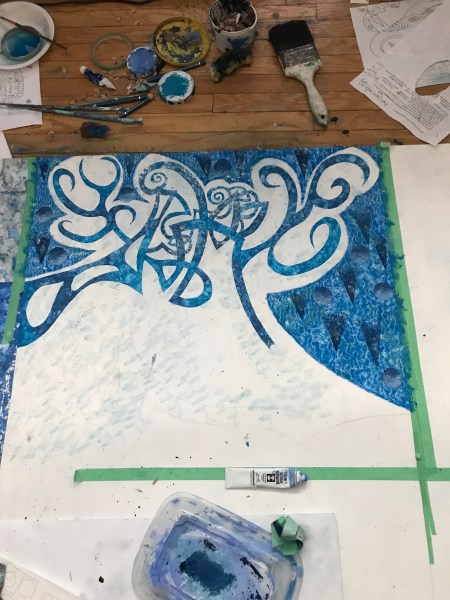
I spent ten months, mostly working in silence, creating this painting (& drawing) on a long roll of inviting, warm paper and felt how it used me as a channel. While writing the artist statement (below) I encompassed multiple perspectives concerning the work, probably with a focus on how and why. This material is from a pdf I assembled to promote the work.


As this mystery in blue appears beneath my fingertips my planning designs go up in smoke. The hypnopompic stage of waking illumines the space behind my forehead with images and textures. I begin working sessions with these. Or I simply wake after three hours sleep and begin where I stopped.
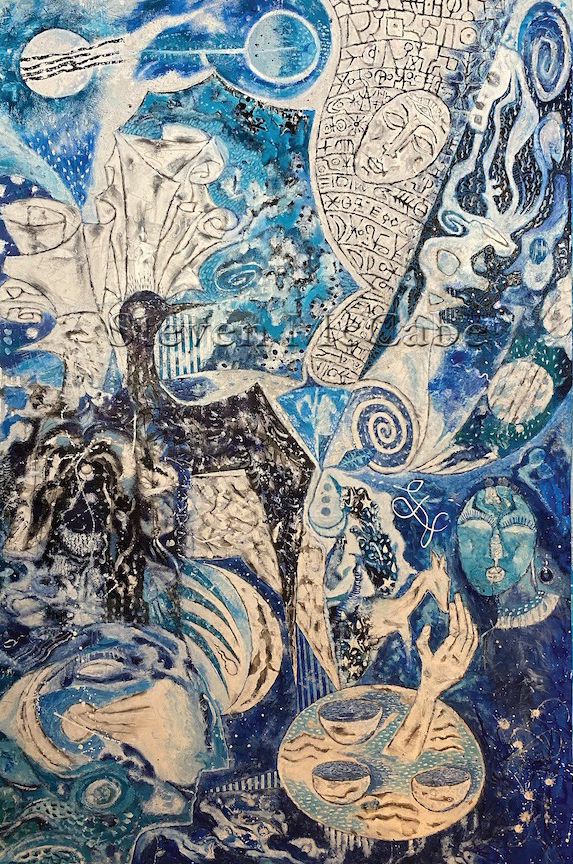
I name the painting Druidica. Then Druidica Blue. Then Druidica Blue: Deja Vu. And finally Druidica Blue: Deja Vu (Cave Art for the New Psyche).
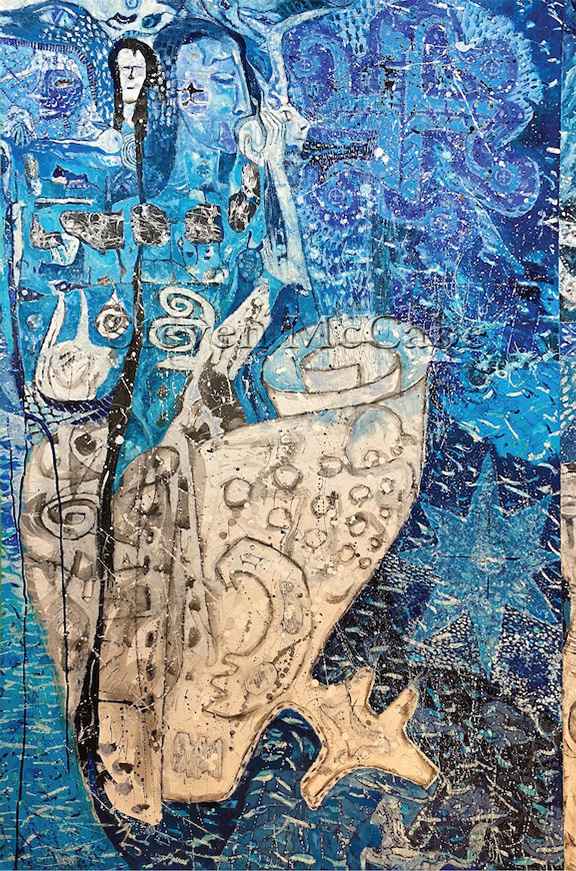
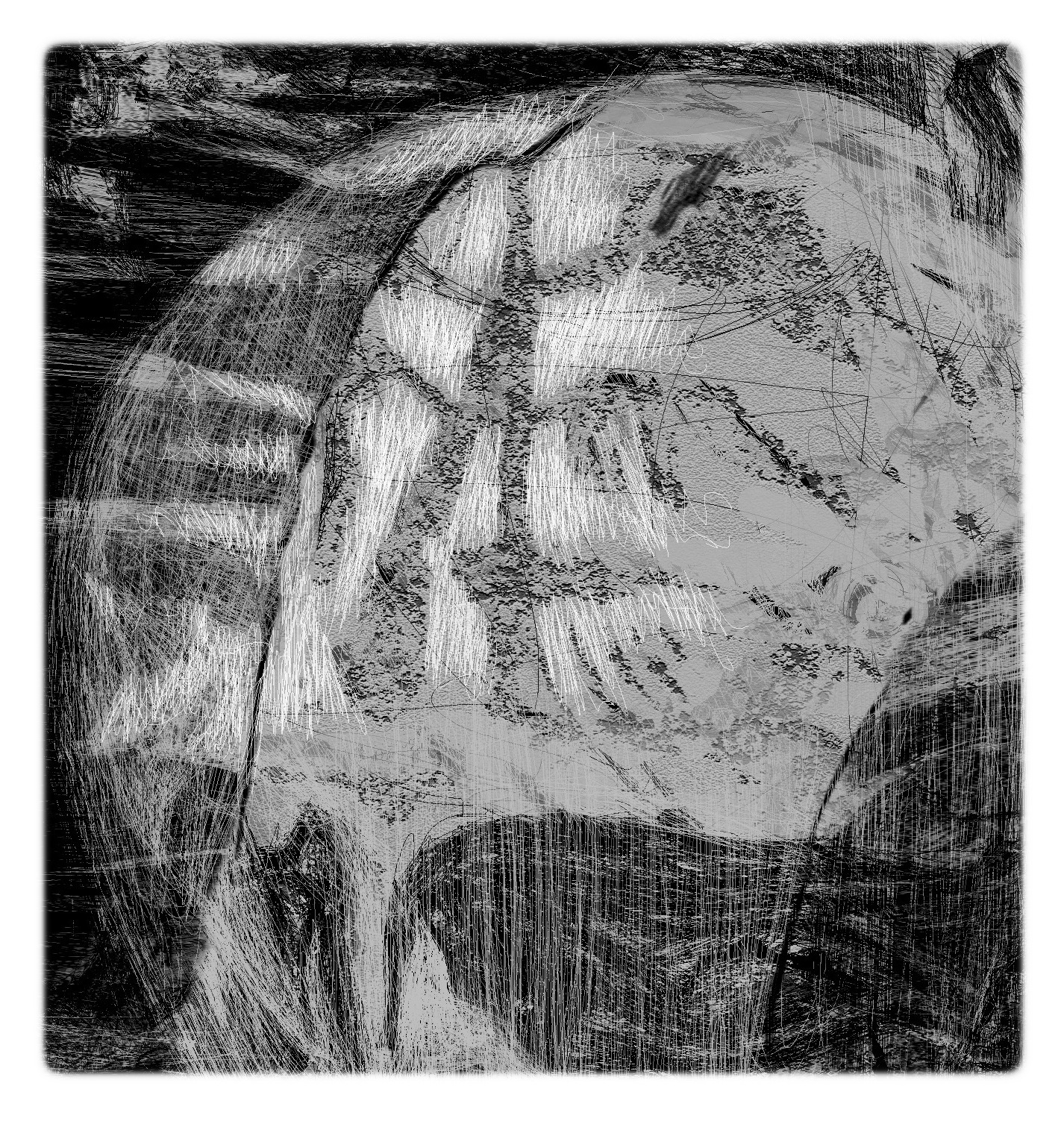
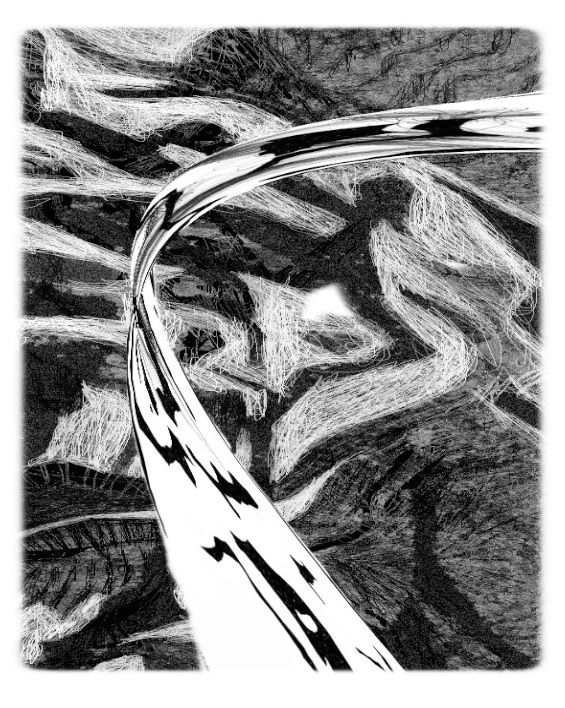
In this landscape of the psyche I unearth longing: A quest for the unknown where I imagine belonging. Dripping, staining & flicking the brush I depict shadows cascading across the cave wall. I tumble influences: Prehistory tumbles into the Celtic tumbling into the Medieval tumbling into Modernism of the early 20th Century. I situate myself in art history addressing postmodern amnesia. I re-imagine now.

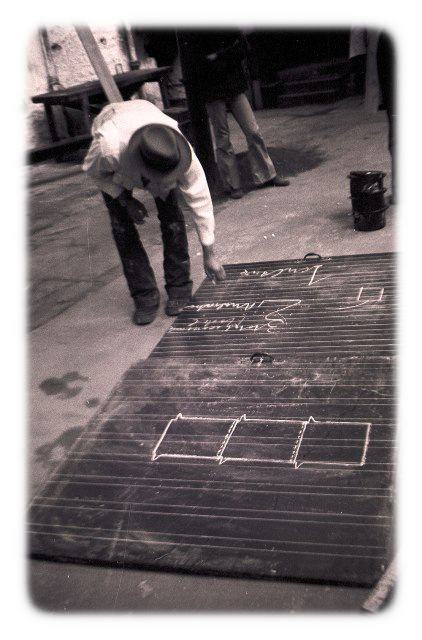
My journey to this point begins with a shattered ankle. Following surgery I draw page after page of two-dimensional spirals morphing into three-dimensional forms. I investigate spiral symbolism and discover a prehistoric language chiseled into stone. I discover: Newgrange on the River Boyne; Rudolf Steiner’s mystic-trance history of Hibernia (ancient Ireland); Three Cauldrons of Poesy transcribed in the Middle Ages, reportedly of Druidic origin now in Trinity College, Dublin; Joseph Beuys with healing language performing Three Pots for the Poorhouse inside an abandoned Edinburgh poorhouse; Sinead O’Connor singing her incisively poignant Famine. It occurs to me this painting joins the 21st Century to an older type of consciousness.
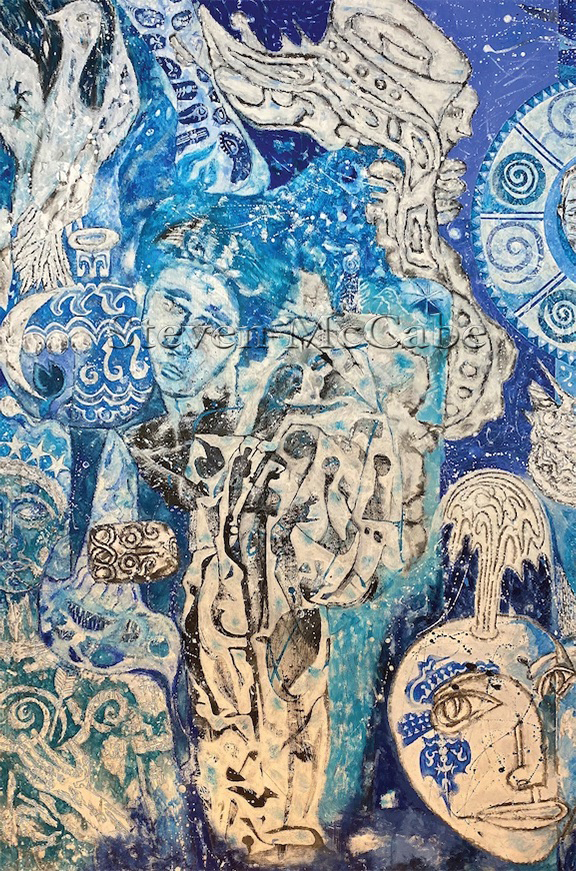
I begin the 35′ (width) X 5′ (height) painting by dividing sections to be completed one by one. After establishing a pattern I lose control and frame the spontaneous narrative in a more nebulous manner. The painting is flowing the same yet not the same. Perhaps mirroring the work of the psyche. One enters at any chosen spot engaging re-imagined folklore, symbolism, magic and iconography. I work using the blues of art history: Giotto, El Greco, Chagall and Picasso leave their calling card. I kneel to blot standing suddenly writing the poetic phrases I hear, arriving from an unknown place.

Out of some great forgetfulness came this blue sandstorm. In remembering the ancestral I multiply shades of blue. I hear chanting in the echoes.
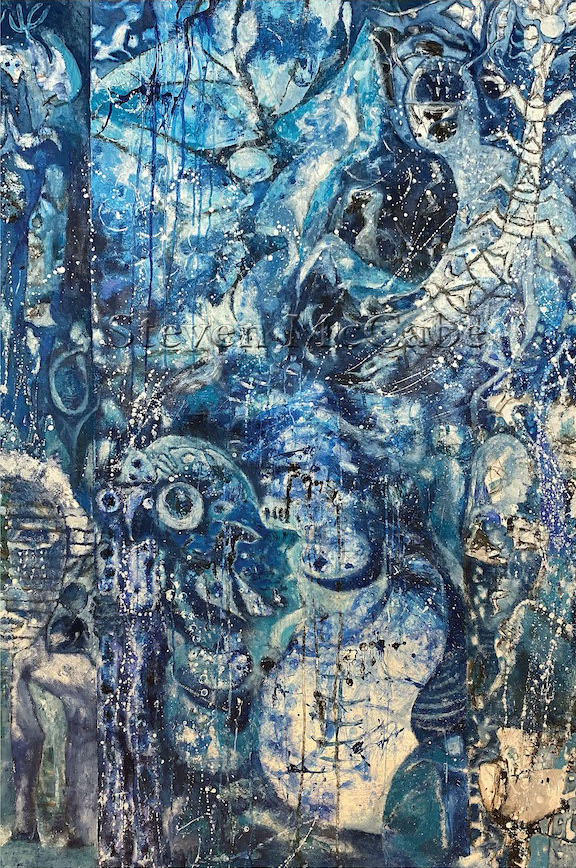
I relate the process of this artwork to projects I have previously created. In creating cinematic poetry videos I worked (with the editor) to compose performers & surroundings in tandem, in motion, defining the wide screen. The one hundred and twenty B&W linocuts I carve and print for my ‘wordless poem’ Never More Together jangle in unison, though pages apart, connected like cars in a train. I exhibit three Moleskin accordion sketchbooks twenty-one feet in length. On a white wall intricate ink drawings unfold across pages revealing thematic and kinetic relationships. A later series of paintings on canvas makes me wish for the emotional & receptive texture of paper.

I read a magical quest poem, The Song of Wandering Aengus by William Butler Yeats. I rewind videos of the River Glyde in County Louth. I follow ancestral footprints down to the river, set sail for the new world and arrive (as Irish Wonder Tales often begin) A long time ago…I sponge Prussian blue, cerulean blue & ultramarine blue into a receptive & emotional texture until the sea-sponge runs dry. I infuse the blues of art history with a dream of the ancestors. I work a thin brush with round-tipped hairs – texturing the Gaelic mermaid wearing a halo who rises in time outside of time, holding a seashell, vibrating the monumental and mythic. Steeped in lore.
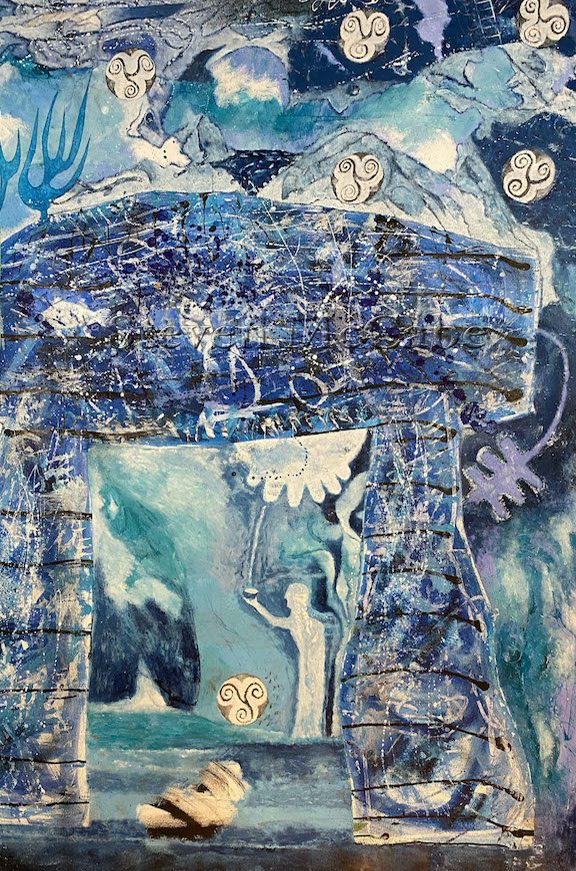
Mirrored images create a jazzy yet alchemical rhythm. I play with the Celtic propensity for seeing in doubles. In visible and not-so-visible relationships. An oracular raven divining portents – a Celtic warrier wounded by an arrow to the heart – a figure aiming a divining rod into the blueness & a herald sounding the (Irish war-horn) carnyx – in nearby spaces one discovers their mirrored doubles. Birds navigate the oracular weightlessness of air.

Energies flash between life forms at the molecular and heroic level. Also in my painting you evidently can get milk from a stone. The dolmen’s udder nourishes the Druid. Metaphorical mysteries nourish the audience. The molecular and heroic awaken the unknown. The painting addresses postmodern amnesia with signs, sigils, and symbols.
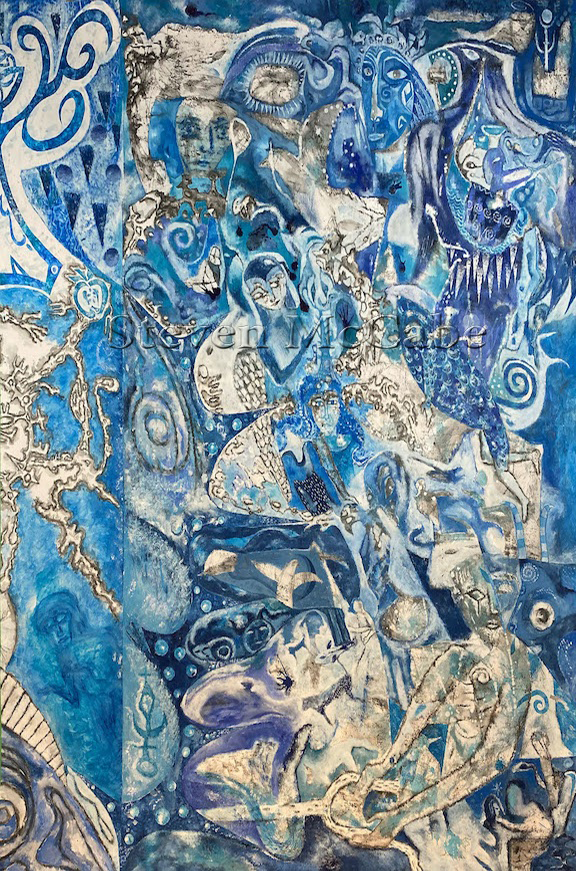
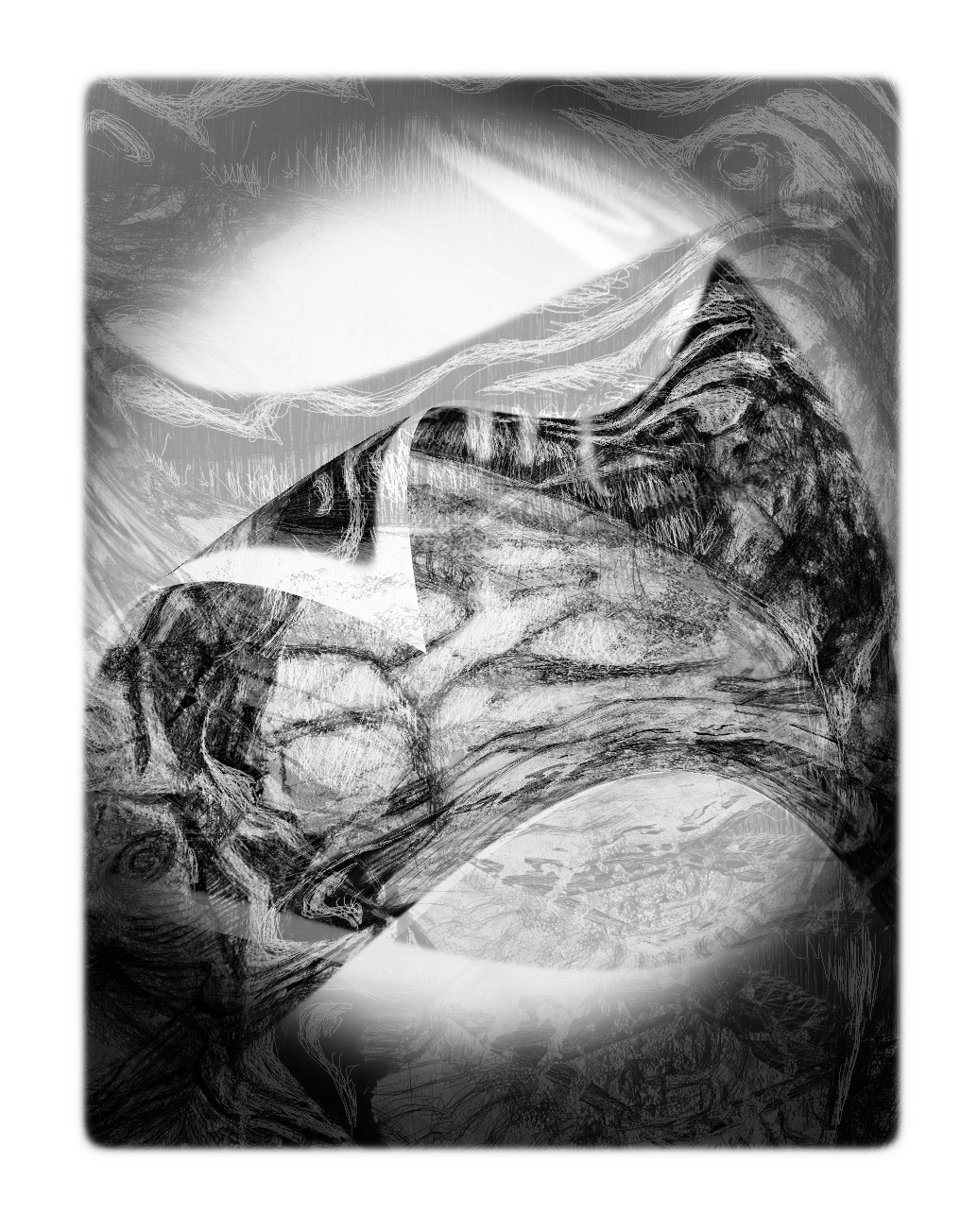
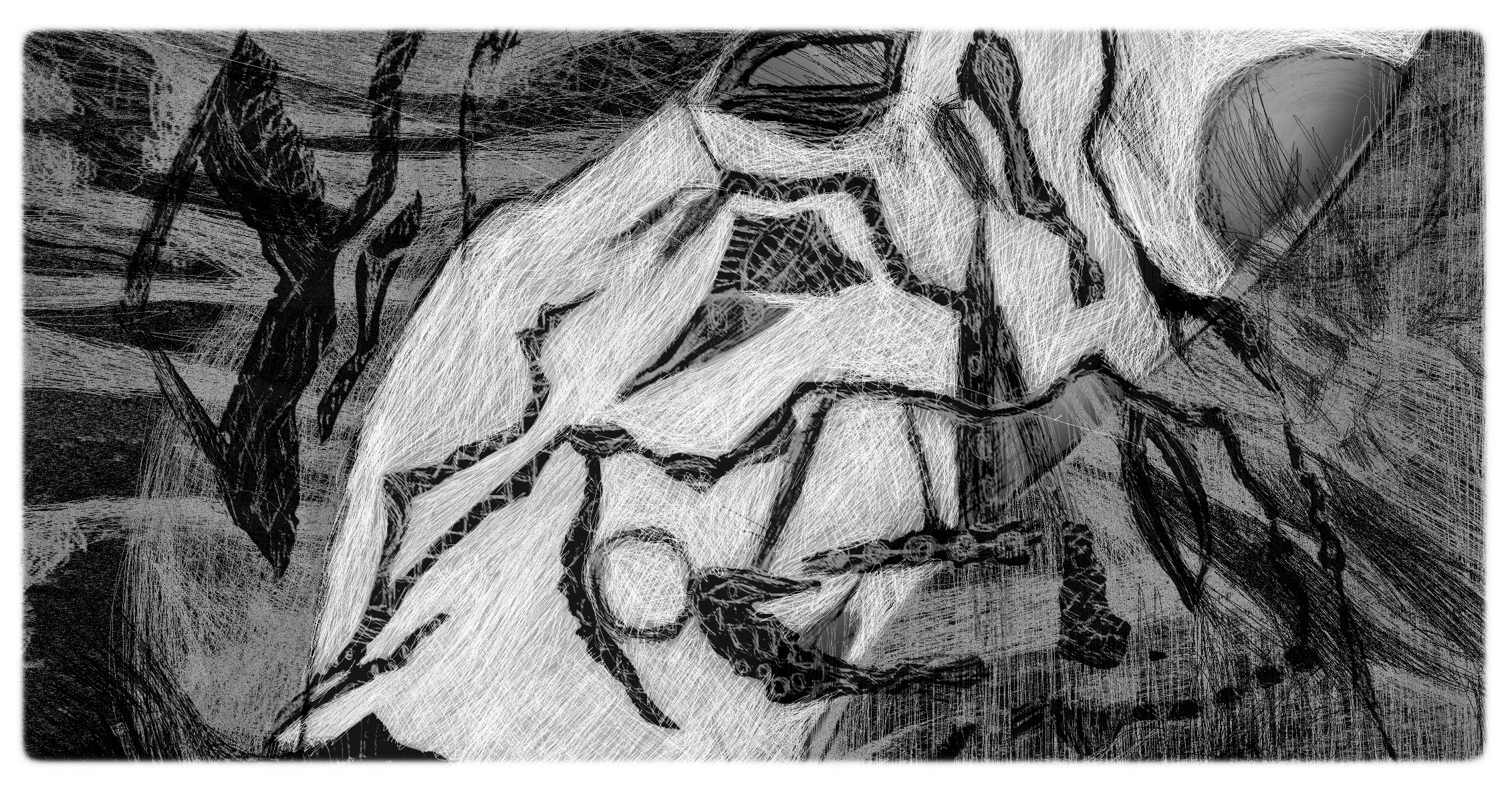
I read of who Taliesin might have been and then The Salmon of Knowledge. Water-soluble graphite releases a quivery chiaroscuro of premonition. I paint and draw both freely and controlled, both somber and subversively zany. Ancestors dye their skin blue with plant ink. I rinse my hands.
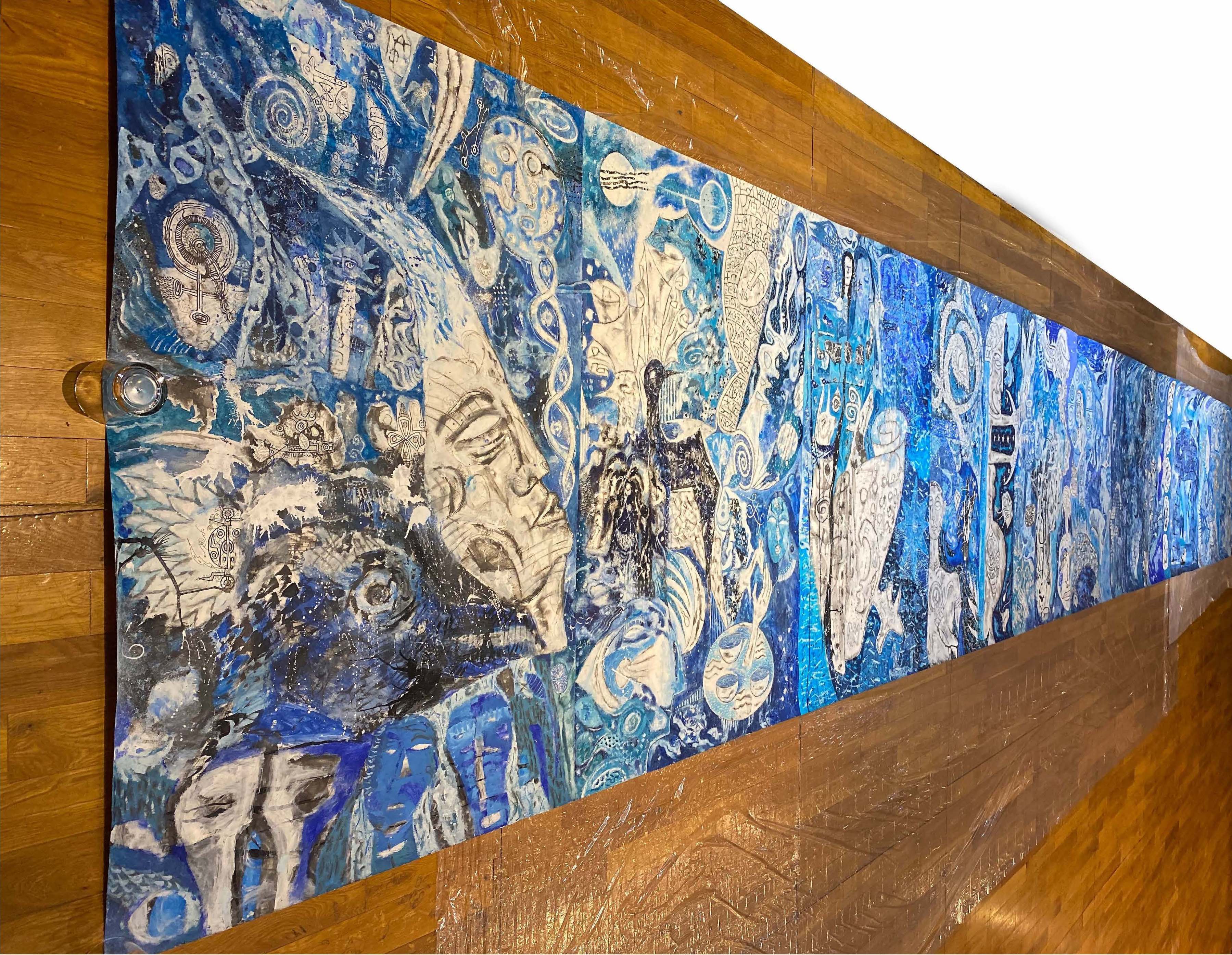
I squeeze tube after tube of Windsor & Newton white gouache dry. I work with gouache, inks, watercolours (in tubes, pan & pencil), aquapasto medium, graphite crayons & pencils, archival drawing pens, some acrylic, some candle wax. I discover baby food jars of blue & white pigment from a long-ago egg tempera painting class.
A channel forges its way into me causing me to dream this dream. I discover the roll of paper is longer than expected. I continue kneeling. It is finished. After ten months I am exhausted. I have translated my longing.
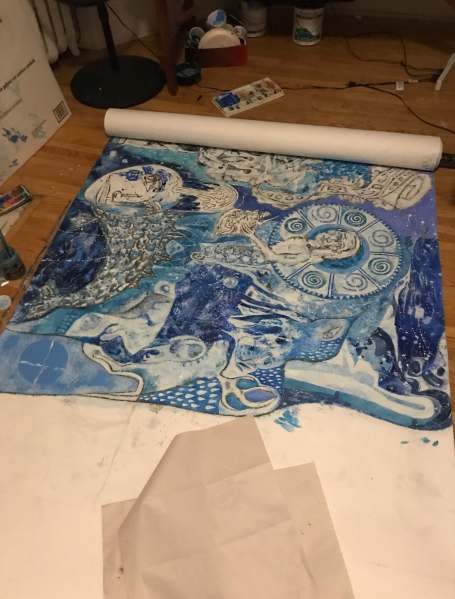

I envision this work, framed & illumined, welcoming an audience. For inquiries visit here & scroll down to my email.

@ The Redwood Theatre, Toronto. Like unscrolling the forest one lives in, seeing it for the first time.

I don’t know if I mentioned instinctive & expressive brushwork building the composition.







 poemimage