poemimage

The visual & the poetic.

Category: Poetic & Visual Narrative

Transfiguration by Steven McCabe

A butterfly wing

Grazes your cheek

Travelling

Two thousand years

Per second.

My latest video poem (or film poem if you prefer). We originally filmed and recorded the drumming over two years ago for a different project which never saw the light of day. In the meantime I become interested in juxtaposing silent footage with live action. I realized we could use silent movie title cards for the poetry and not compete with the sound of drumming. The poem Transfiguration was originally published in my 1999 collection Radio Picasso (watershedBooks). My poetry videos can be found @ http://www.youtube.com/mccabesteven


« Goutte À Goutte », Plein verre, 1940 (May) by Pierre Reverdy, Translated by Pierre L’Abbé, 2011.

quartet

Drop by drop

drama

The habit of loving
The sap of fatigue

intersection

tritone

The torrents of sleep
In the pit of nefarious plans

shadowed a
If I had to give over the secret of the past
I would no longer fear the heaviness of blood

intersec  tion orange
Being alone
Sharpens revelations on the edges of the wind

white cracks copy
Weak and ugly
I sleep in gutters

new twin
Doubled, exposed to the weather
To the barbs of fate
To the blows of fortune

celtic animal
The bubbles of dark days burst in my hands
Life trembles irresolute on the edge of each sheet

mirrored

wash
Along the borders of the morning

wash
I no longer take a turn

wash

queen

The forms of hatred
Cheeks bulging with fire
These starving ovens

glassed

her wall

When love enlightened breathes on bitterness

a garish village
And dances on the dream-rope of nothingness

splash 3

face subtle

Pierre L’Abbé is a translator, a publisher, and the author of poetry and short story collections. He lives in Toronto.

final one

new carnival

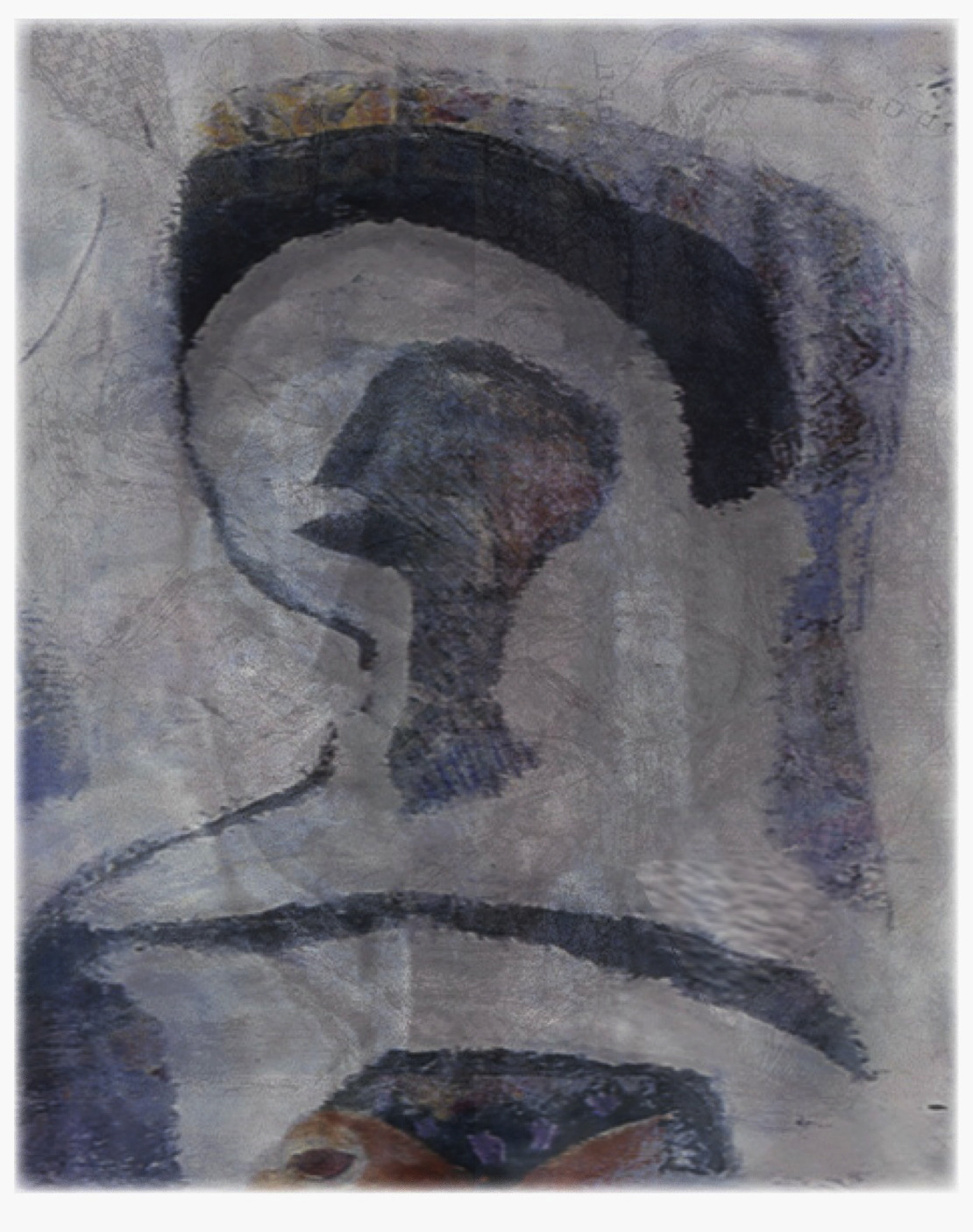
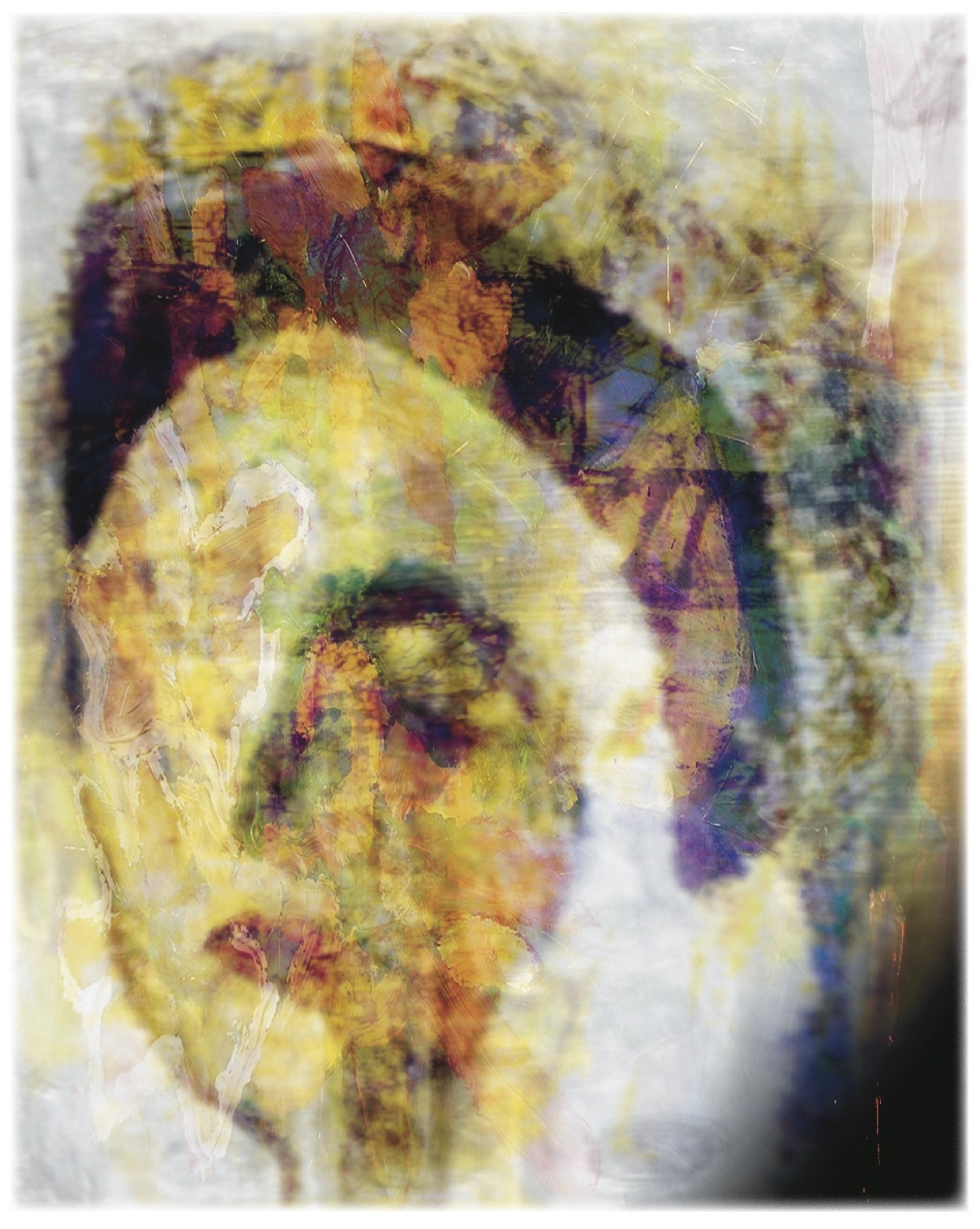
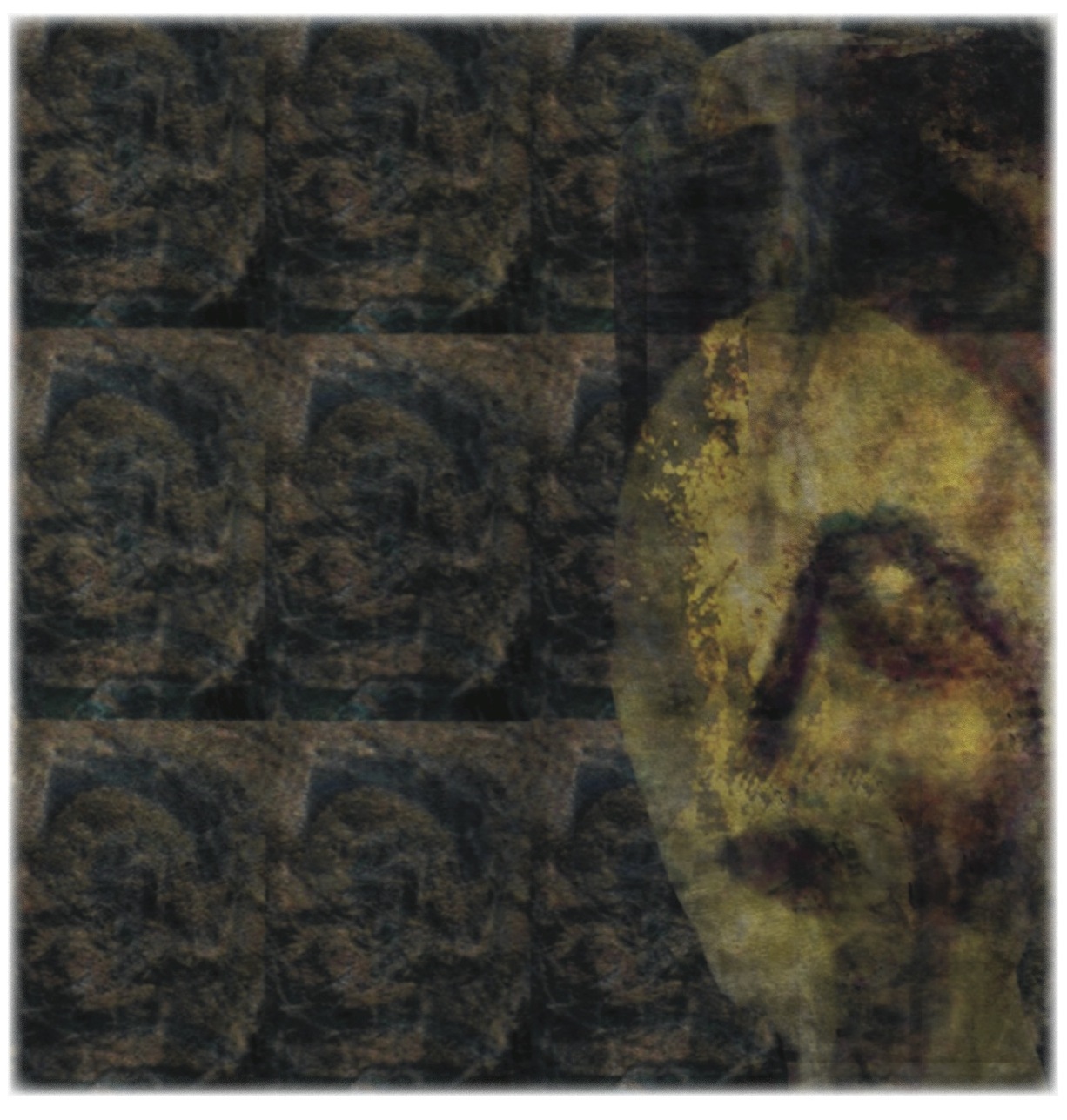
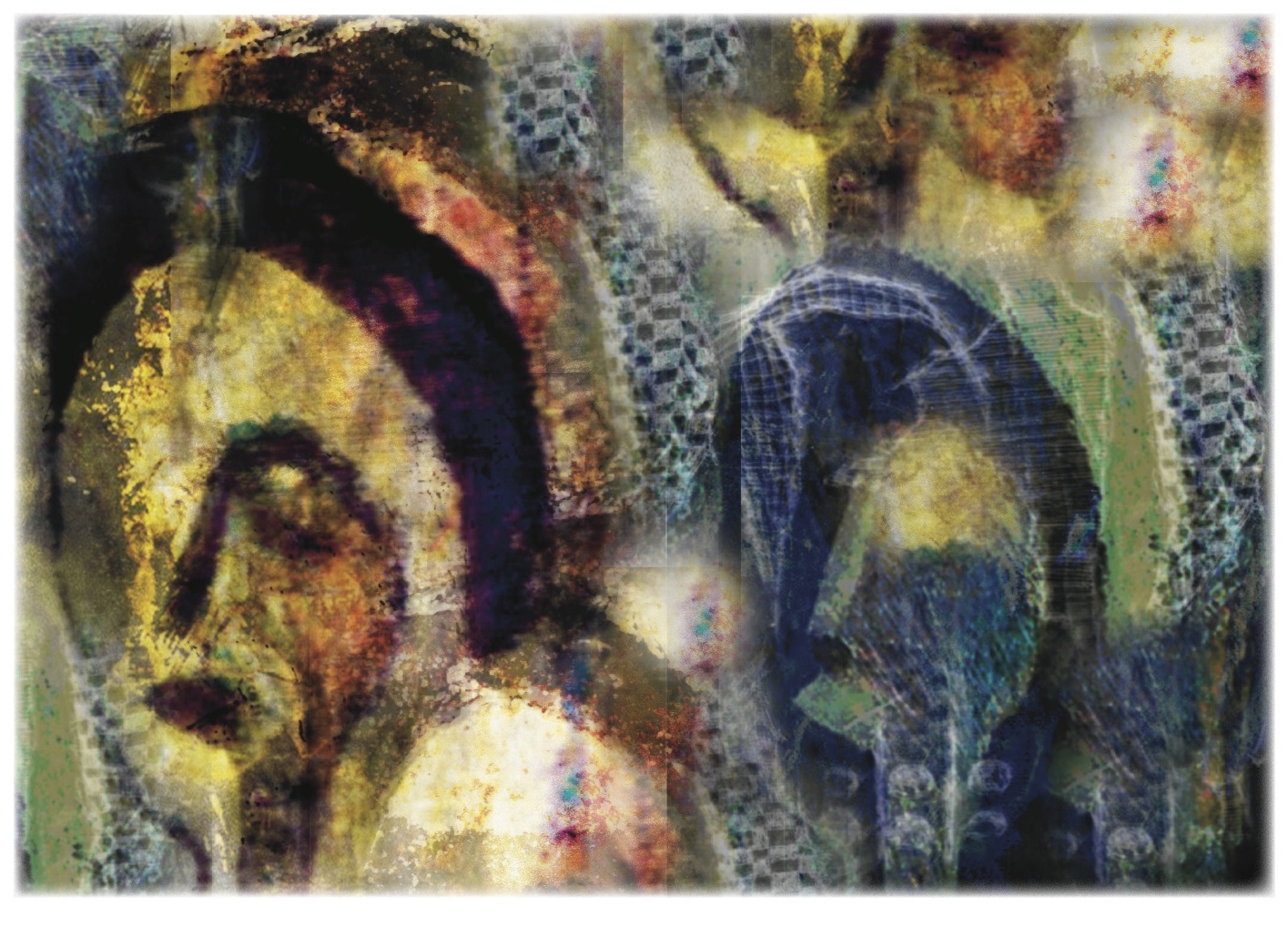
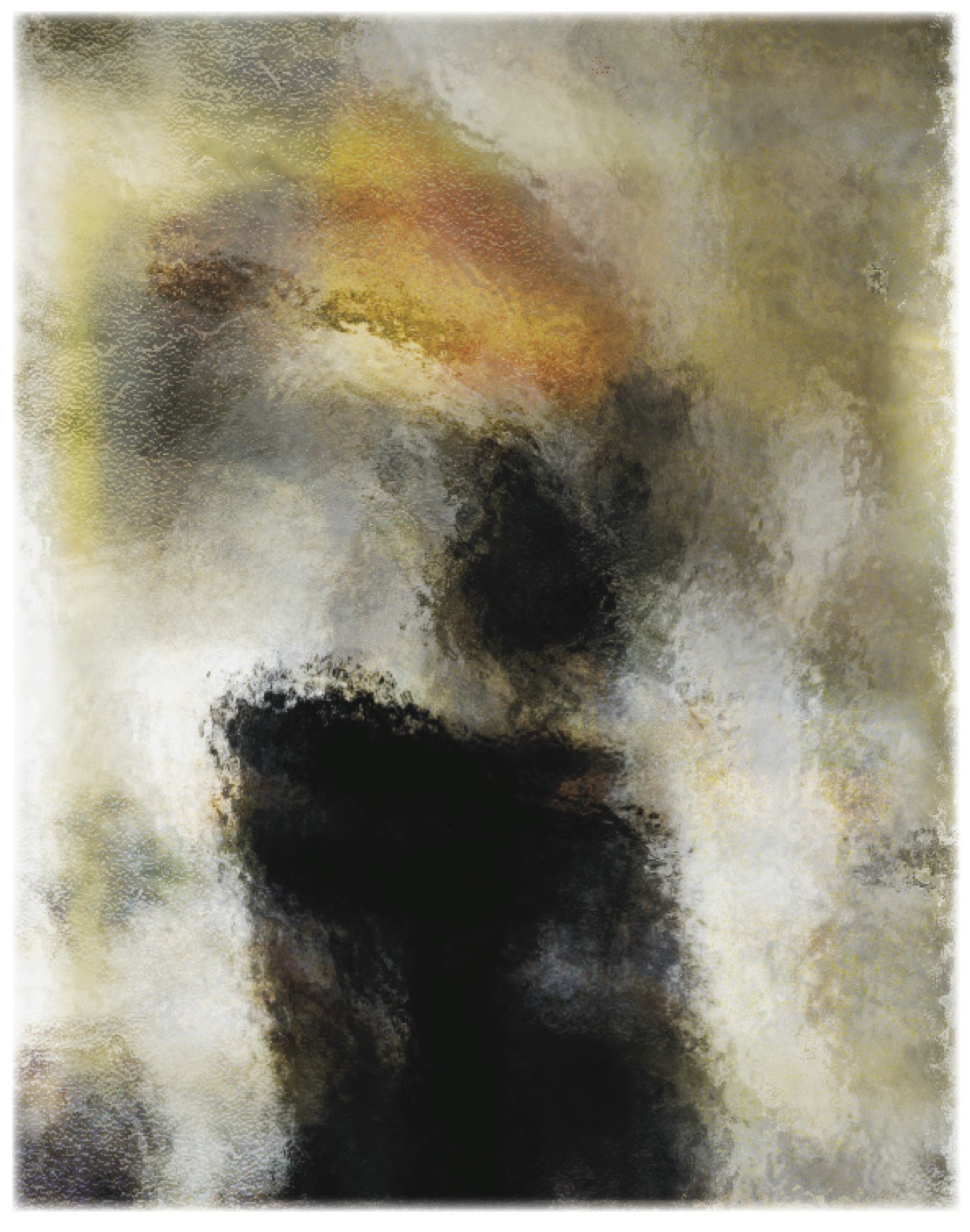
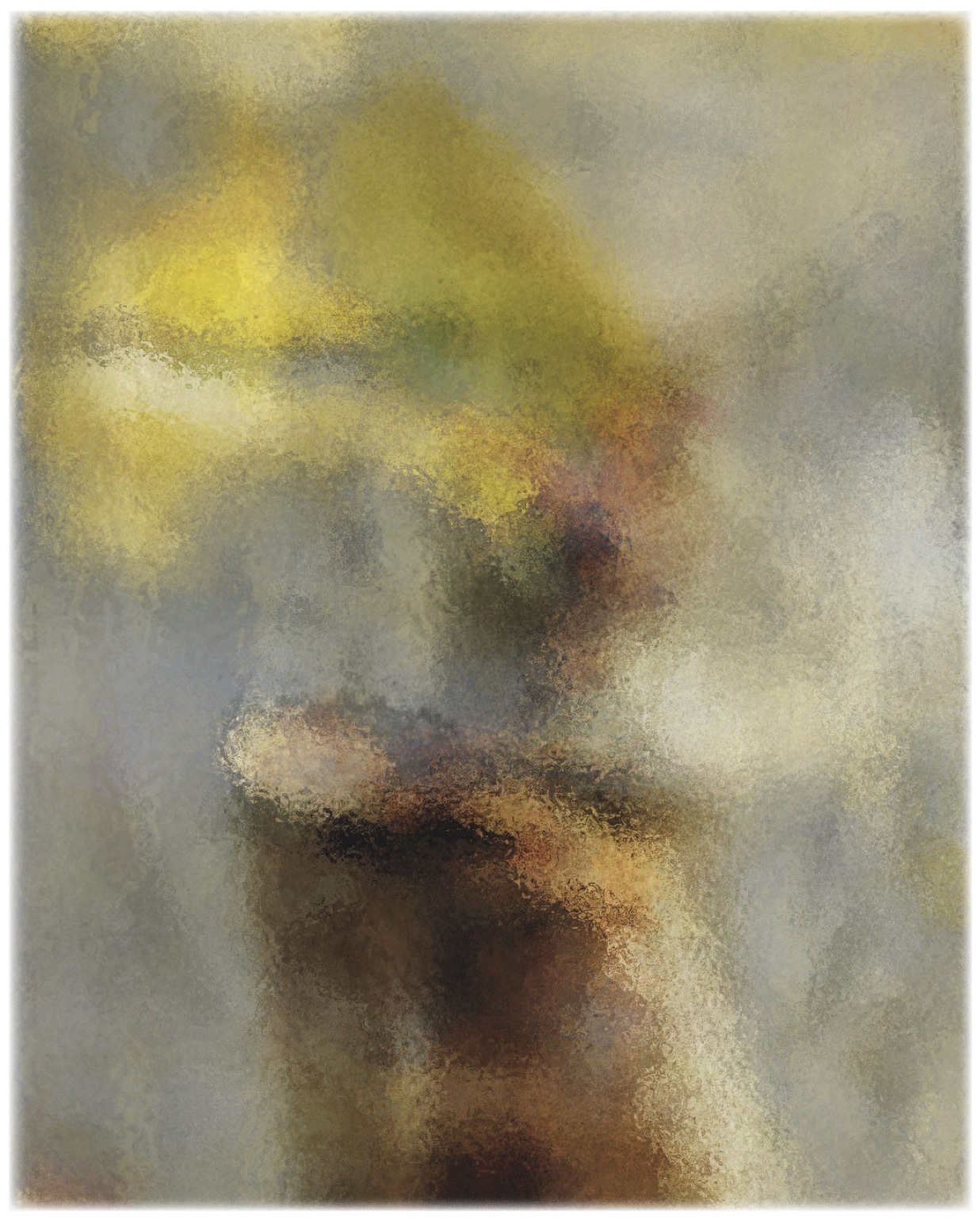
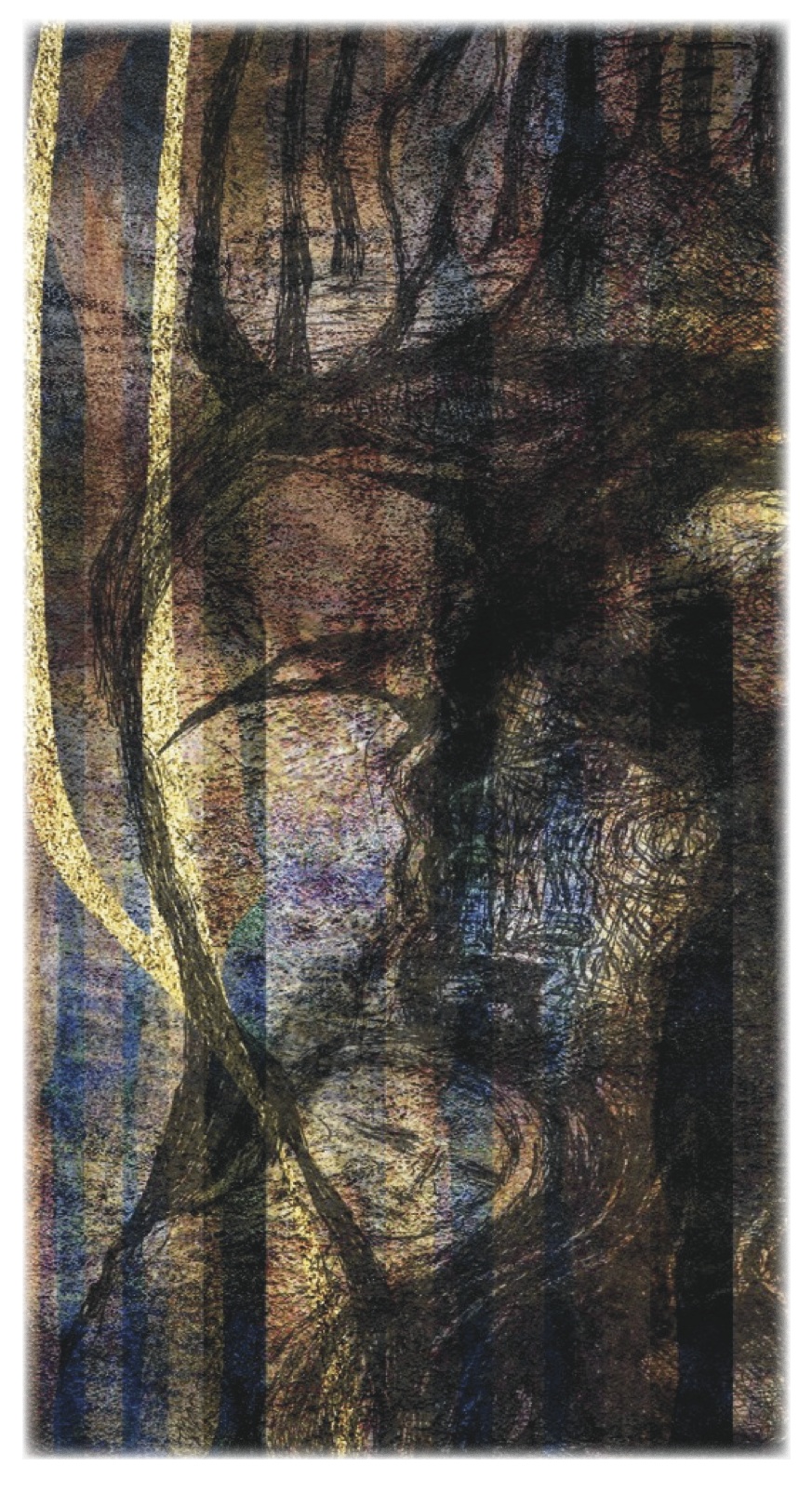
When I began generating images for this Reverdy poem my focus was ‘self’ seeing ‘self.’ I wondered also if the poem was historical. I pictured incidents from World War Two. Or maybe psychological? The poem seemed to present an existentialism assuaged with the balm of cathartic love. And then because, coincidentally, I assembled this page on Easter Sunday, I considered (perhaps outlandishly) this being a dialogue between Jesus Christ and Mary Magdalene. In two voices. An end to their metaphysical, sexual, emotional love. Hmm…perhaps too literal. I wasn’t sure where metaphor began and personal voice ended. This began a chain of associations concerning language, representation, authenticity, double-identity, etc… and I was back at the idea of ‘self’ (whatever that is) seeing ‘self.’ You know that feeling you have when you look in a mirror? You know it’s you but you’re not quite sure who ‘you’ is. You see yourself experiencing an image of your self. So, as you can see, the poem presented a host of interpretive challenges. Pierre L’Abbe would know far more than me about this poem’s purpose. As always, I went with my intuitive response in creating images. In this case a face and a figure interact while constantly transforming.

Lough Ree by Colin Carberry

c

8888

77777

blu flame

A trout flares at dusk,
silver scales
in the heron’s ears.

blueish a

new blue

Colin Carberry is an Irish-Canadian poet and translator and the director of the Linares International Literary Festival (Mexico).

a.

I am struck, reading this haiku, by the heron hearing silver scales. I imagine sunset splashing chaotically on thin, reflective surfaces and the heron’s acute sensors turning and tuning. I remember summers (it seems long ago) driving cross-country, through the night, listening to the radio. Car radios were manually operated. With your free hand you would find the spot where there was no static, bringing in the station clearly. Adjusting the dial frequently to receive the perfect reception. Ambient static would slowly creep back in and you would fine tune again listening carefully. Though, unlike the heron, your aim was enjoyment not survival. Surely our ancestors knew the life and sounds of water, within and without, like a heron. The poet, crafting this poem, brings us to the edge of our deepest memories.

Paul Klee by Paul Eluard – translated by Nancy Kline

f

what is to come

On the death-­dealing slope, the traveler makes use

Of the favor of day, the slippery frost, no small stones,

And eyes blue with love he discovers his season

Be­ringed on all fingers with stars.

white whirl

d

monumental whirl

On the beach the sea has relinquished its ears

And the sand digs the spot for a beautiful crime.

underwater book

n.b.and

Torture is harder for hangmen than victims

Bullets are tears and daggers are signs.

brightly dark

fish

Capital of Pain, Black Widow Press, 2006

translated by Mary Ann Caws, Patricia Terry, Nancy Kline

originally published 1926.

i

I was apprehensive about applying my images to a poem about Paul Klee. Klee is one of my favourite artists for many reasons. He used line masterfully. His sense of colour and texture was both magical and visceral. He was intellectual as well as full of child-like wonder. He experimented imaginatively while rigorously creating an expanding body of work. This poem by Eluard is like a prism capturing various realities & dimensions one might encounter in Klee’s art. I wanted to depict the sensibility & feel of the poem but I wasn’t sure how I felt about making images about somebody who made images. And I didn’t want to copy Klee in any sort of obvious manner. I shared this concern with Nancy Kline, the translator of this poem & many of the poems in Capital of Pain. Nancy suggested that one visual artist interpreting another might be an worthwhile experience yielding interesting results. And with this encouragement in mind I worked on composing images that hopefully come near the boundaries of ‘Klee-ism.’ 

The Pageant by Penn Kemp

a. penn text water

On the Moon after Solstice
you dream of hiking contours
to cathedral carol service.

b. transcendental
Singing in the cavern of nave,
omphalos to the world, you curve
on rounded meridian of joy to outer
space, linking with others of like mind.

O.dance of the red skirtsP. oval
You race to catch the authors
to know the next act.  Old tales
are told and tell themselves new.

d. stones in a bowl
You connect fragments, dropping
your lines, dropping me a line
in the cheer of retrieval.

e. darkly

1.double page chapbook imageg. three days
Rings of companions collaborate,
not wanting to recapitulate
events of the day merely or
invent night’s happenstance.

golden huecandlelight
Something’s given, something
larger than the single self.
Presently you’ll know the story
as it is happening to you.

the soilold carnival
Singly or together our dreams
direct us, as if night-given leads
to true script.  What is real
agitates dream into action.

q. altered mss

shift

Penn Kemp is London, Ontario’s inaugural Poet Laureate.

l. abstract ex.

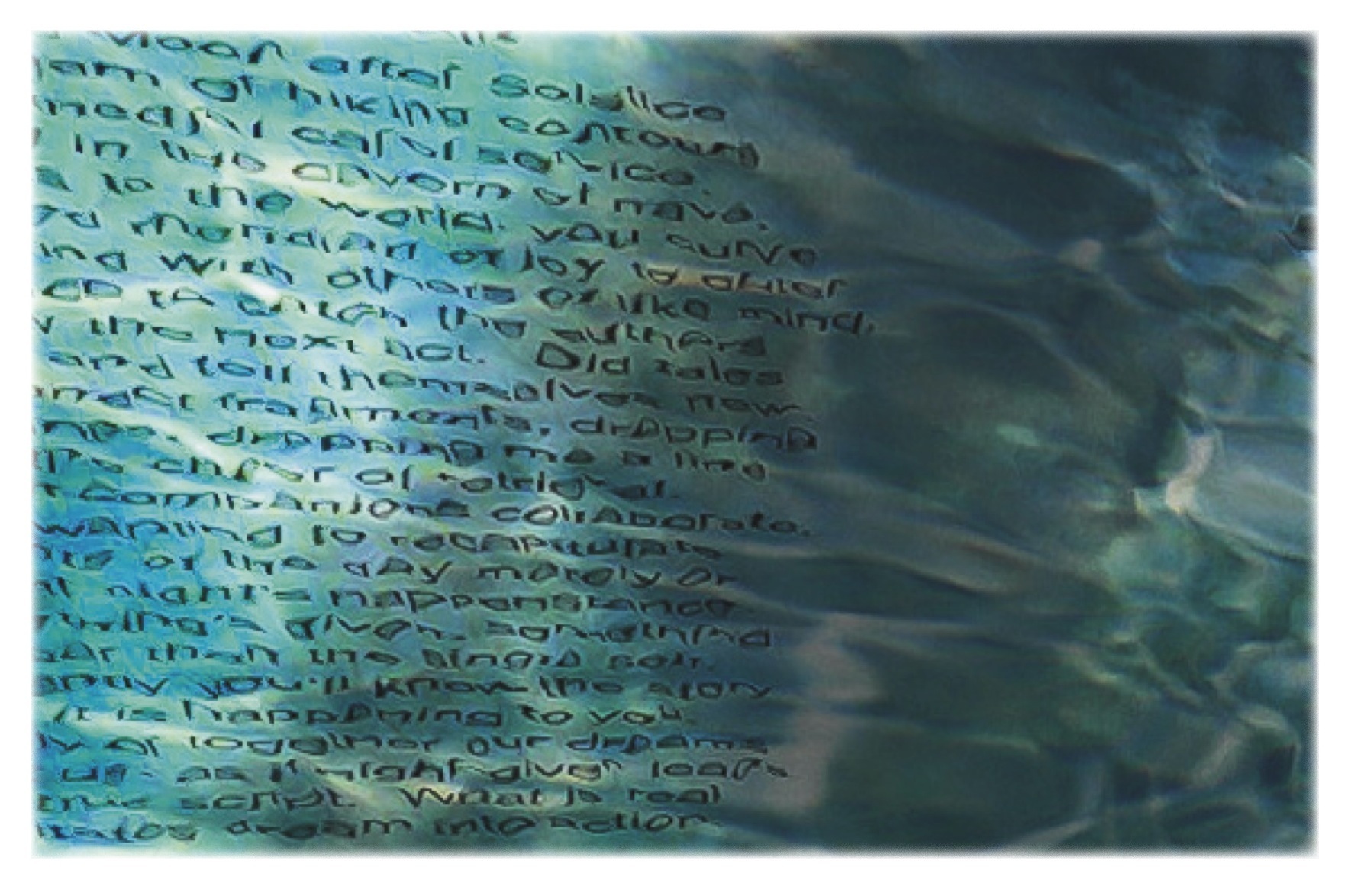
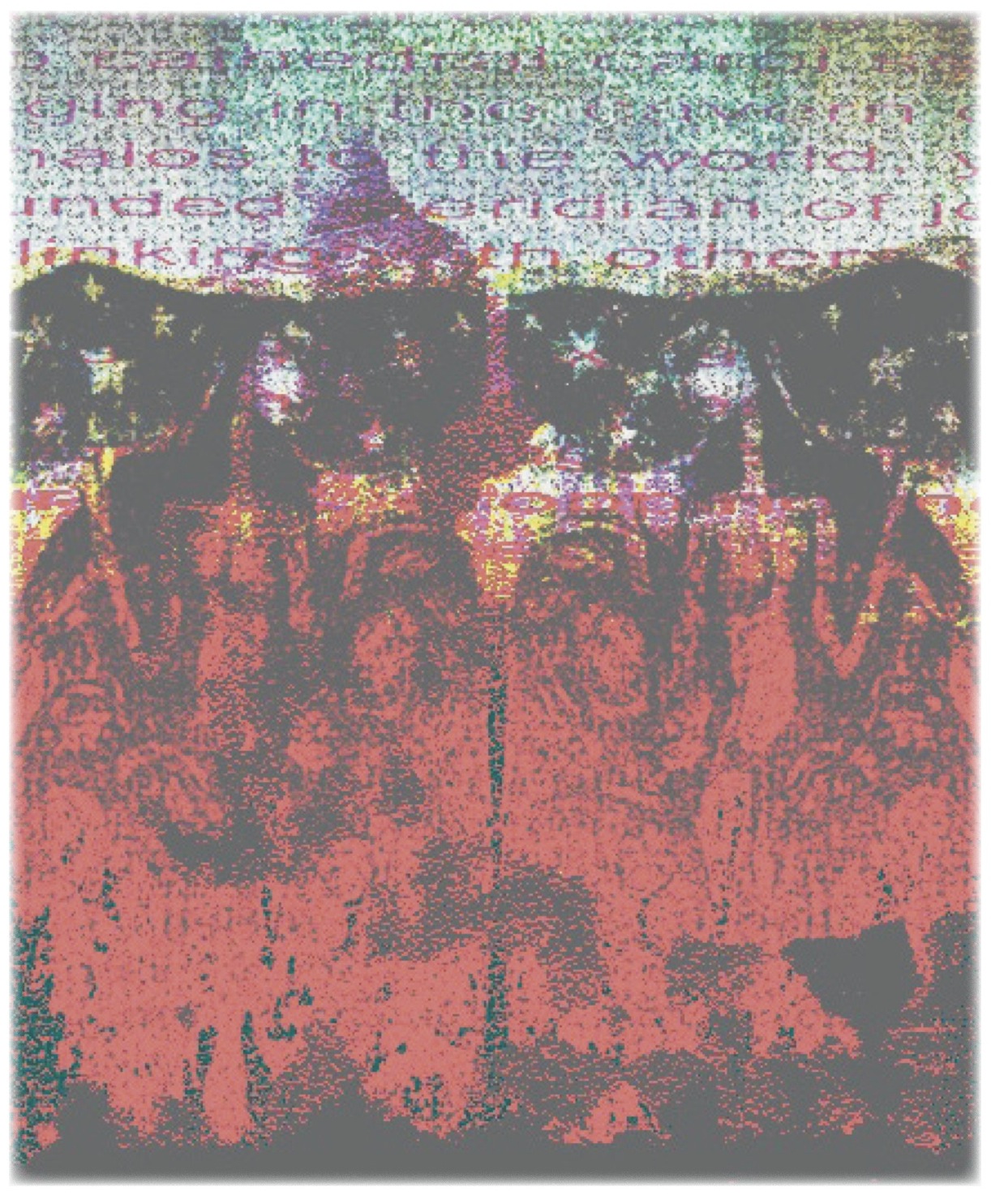
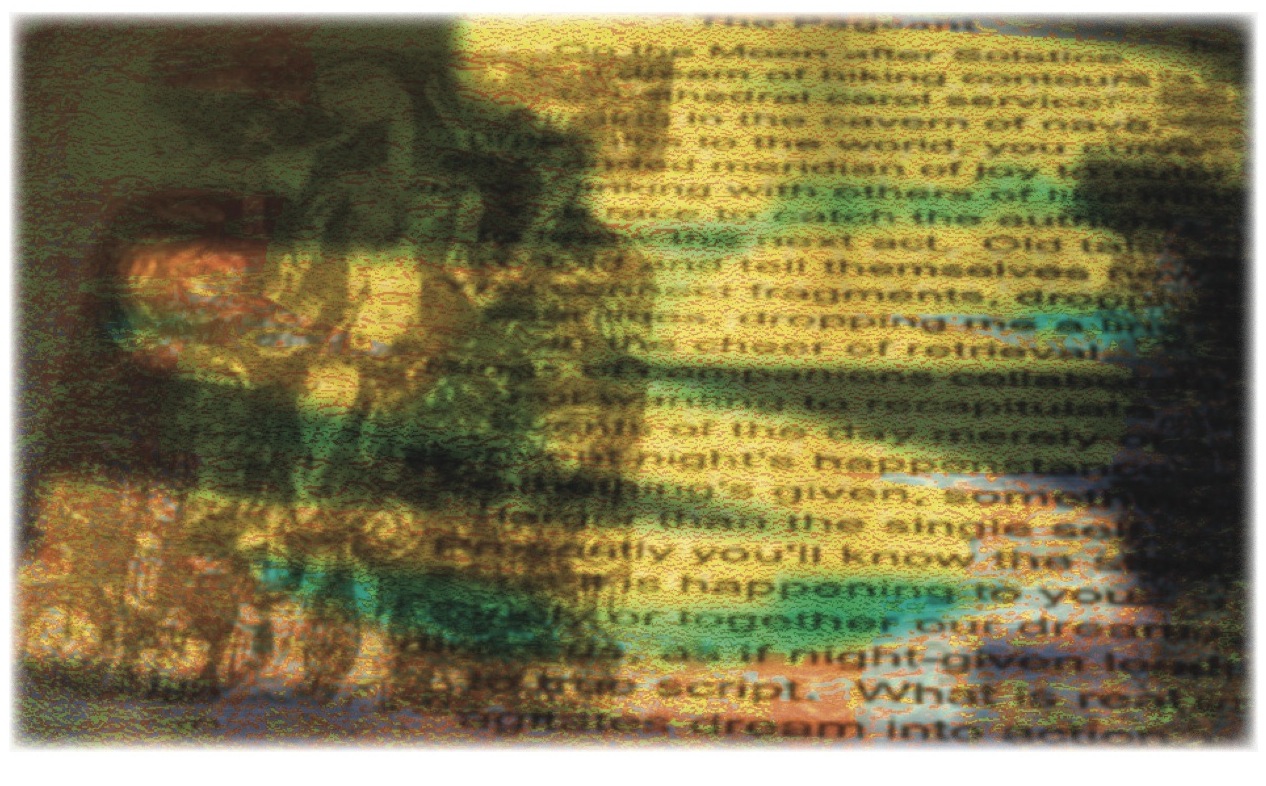
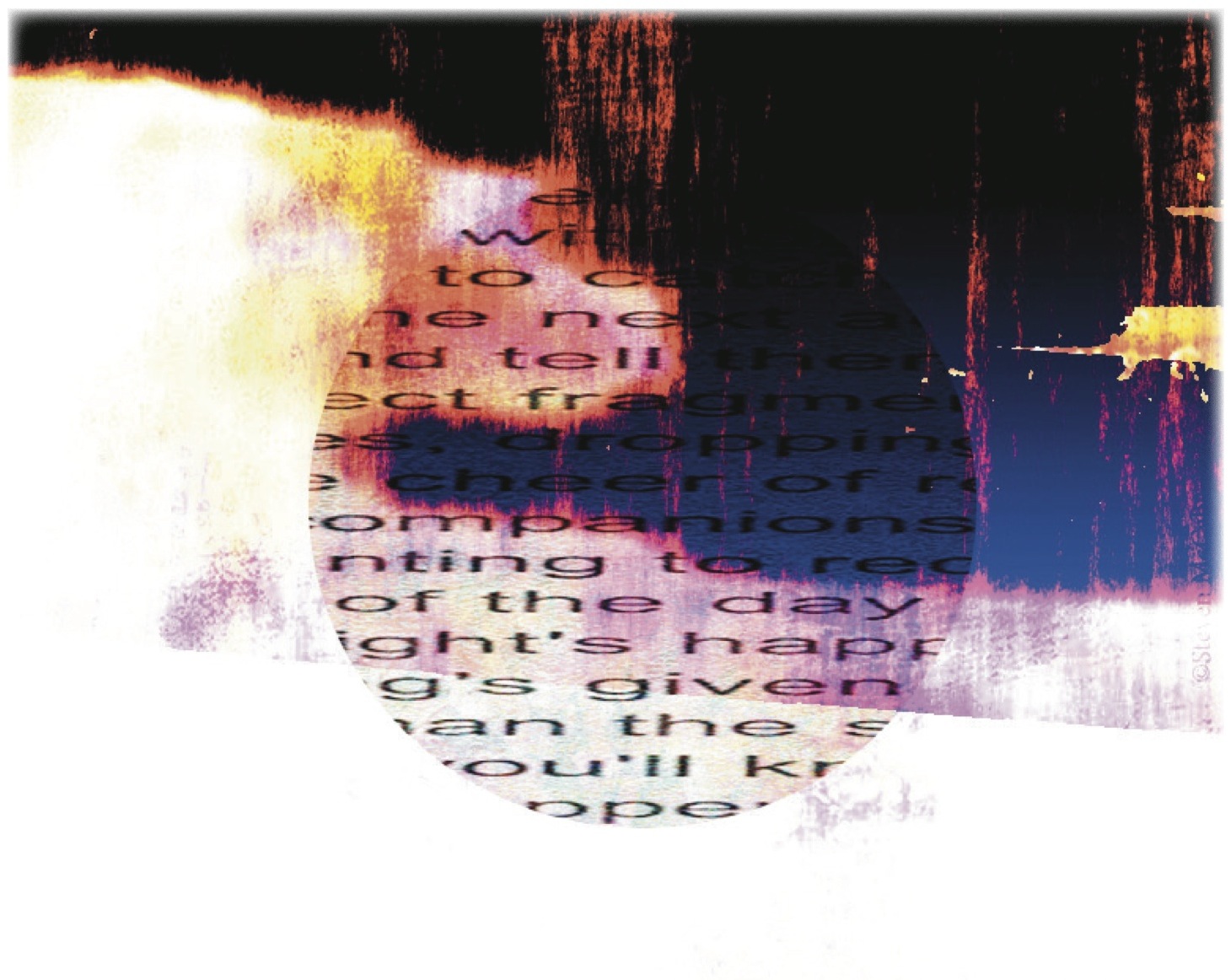
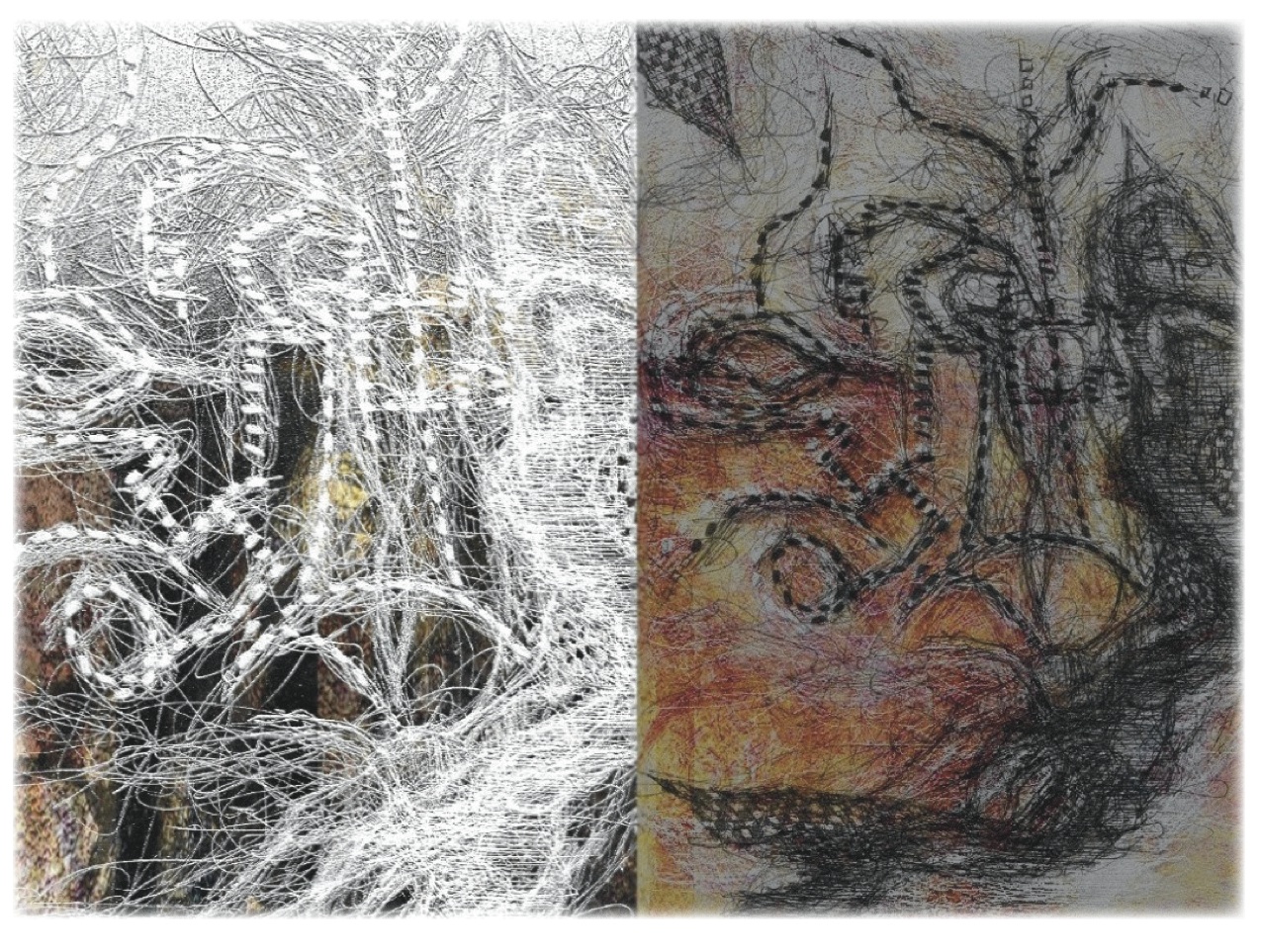
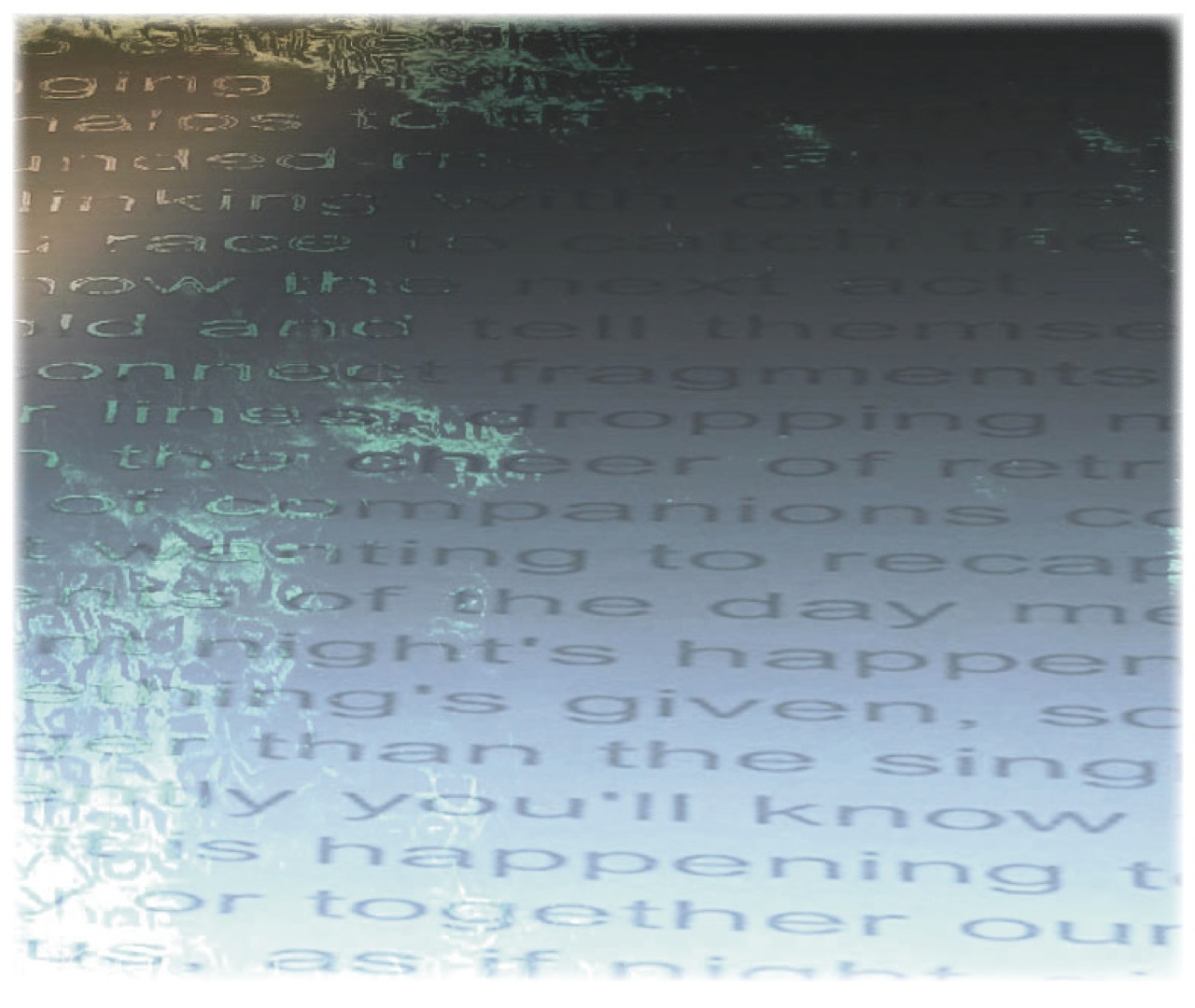
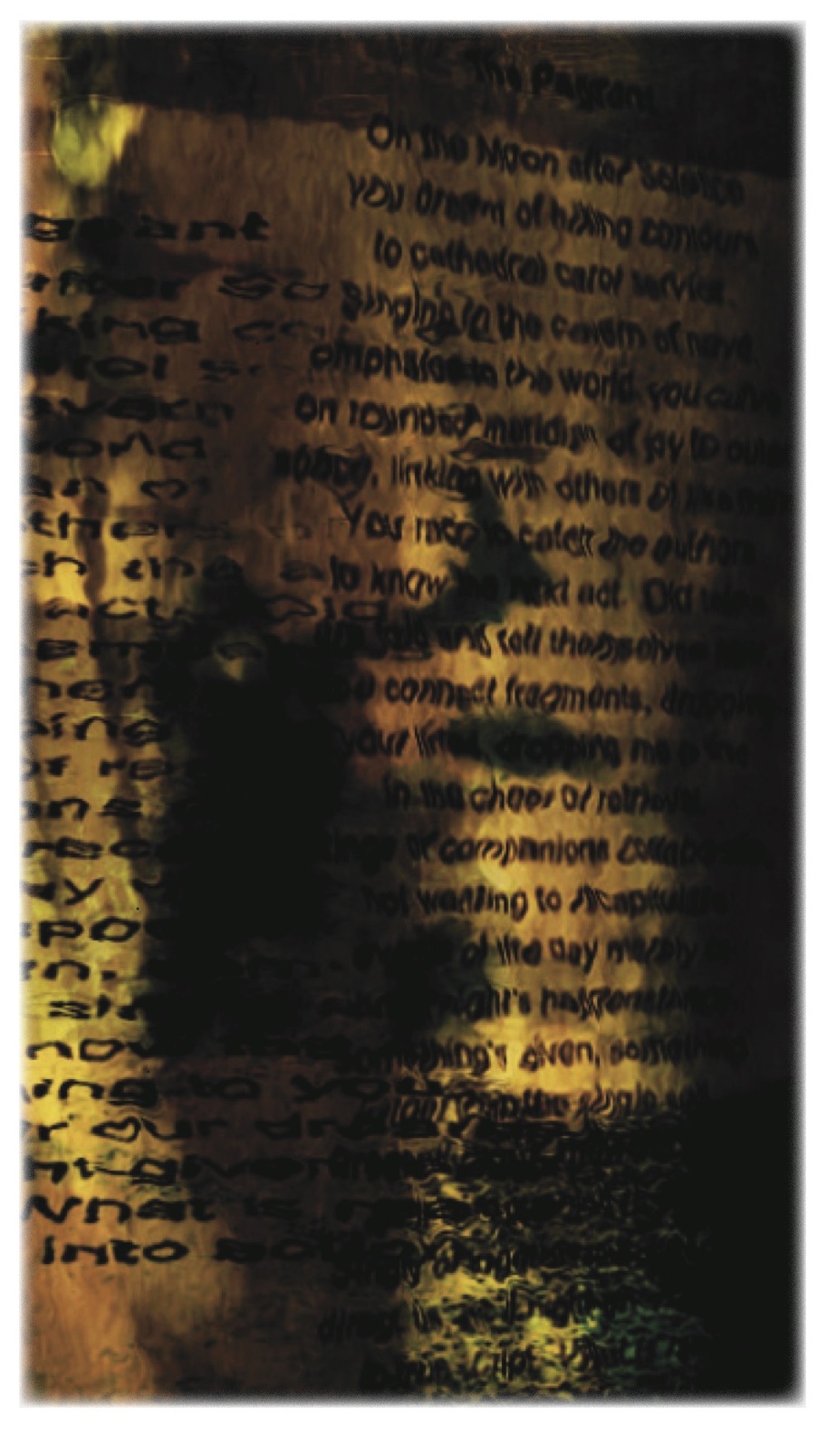
In 2012, Penn Kemp and I published the chapbook Dream Sequins with Lyricalmyrical Press in Toronto. The title refers to Penn’s poetry manuscript. My contribution consisted of 18 ink drawings. I sent Penn a number of scans which I thought related or tangentially connected to her words and she made the final selection. Drawing can be an automatic process, as spontaneous as dreaming, with line unfolding connections not crafted by the conscious mind. My body of drawings 2009 – 2011 expressed a number of intertwined themes & at a certain point Penn and I connected. We were independently working in close enough proximity to our ‘source’ materials that text & image, both floating on a warm parchment paper, felt synonymous. This post was inspired by the idea of using Penn’s words as a design element in constructing digital images while referencing one poem & drawing from the chapbook.


K.C. by Steven McCabe

boy and space 2

boy in space

Seeing the unseen between my eyes and outer space

new eye space

I was a boy painting my sparkling new bicycle

With house paint

now this

Squinting in the shade of a sunflower

Wiping soil and lumps of melted star off the brush

the sumerian flower

Aiming for that white-as-a-skeleton-invisible-sky-hourglass

Concept of two gods becoming one

sumerian lad

Me and my bicycle at the intersection –

Red lights fading my pupils dilated

triptych 2eye seven

from Jawbone – Ekstasis Editions – 2005

When I was a boy in Kansas City, one summer, I studied the sky. It was a dull white far off in the distance, and yet up close ‘it’ was invisible. So it dawned on me to paint my new bicycle white; up close the bicycle would be invisible, at a distance everything would seem normal. My mother was more than happy to keep me busy and found the paint and a couple of large brushes. I threw myself into the task, painting the seat, the chain, the handlebars…everything! Sadly the next day the paint flaked off and my experiment failed. Several decades later I was reading a creation myth about two gods battling in the sky. One god lost a foot to a sharp knife and black ‘blood’ (night of course) filled the sky. I remembered painting the bicycle, and decided to harmonize both ‘sky’ narratives, intertwining them in a poem. My editor reviewed my work and, being a minimalist, took out her pen; underlining, crossing out, and circling lines. In the end I had a nine line poem.

constance by Joanne Arnott

constance new

when i was pregnant, she told me

reaching back more than twenty years

for the memory

constance f

constance k

i put sunflower seeds on my belly

i used to read aloud to my son

so he could hear our bones

constance j

i love our voices, she said

constance b

chickadee & sparrow flutter down

lured by the seeds and undisturbed

by our voices

Untitled-2

i put your hand on my belly

i invite you to read this aloud

i want to listen to our bones

cons

& to love our voices, for a little while

glade

final hand

Joanne Arnott is a Metis poet living on Canada’s west coast.

No Hard Feelings by Paul Eluard – translated by Nancy Kline

dddd-swarmed temple

Tears in the eyes, the sorrows of the sorrowful,

Dull sorrows, dreary tears.

He asks for nothing, he isn’t unfeeling,

He’s sad in prison and sad if he’s free.

del-love-d-scircular

The weather is sad, the night so black

You wouldn’t put a blindman out. The strong

Are sitting, the weak hold power

And the king stands near the seated queen.

haze2
Smiles and sighs, insults grow rotten

In the mouths of mutes and the eyes of cowards.

Think nothing of it: this burns, that blazes!

Your hands fit in your pockets and against your brow.

transforming

A shadow…

All the bad luck in the world

And my love above it

Like a naked beast.

warmed temple

Capital of Pain, Black Widow Press, 2006

translated by Mary Ann Caws, Patricia Terry, Nancy Kline

originally published 1926.

circular


[The image of man] by Paul Eluard – translated by Mary Ann Caws

eluard magic

The image of man, not now underground, is resplendent. Plains

of lead seem to assure him that it will no longer be reversed,

but this is only to plunge it again into this great sadness which

gives it an outline. The former strength, yes, the former strength

used to suffice unto itself. Any succour is useless, it will perish by

extinction, a death gentle and calm.

eluard celuard aa

She enters the dense forest, whose silent solitude hurls the soul

into a sea whose waves are lamps and mirrors. The lovely star of

white leaves that, on a more distant level, seems the queen of the

colors, contrasts with the stuff of gazes, leaning on the trunks of

the incalculable incompetence, of harmonious plants.

eduard beluard's eye

Not now underground, the image of man wields five raging

sabres. It has already unearthed the hovel housing the black reign

of the enthusiasts of begging, lowliness, and prostitution. On the

largest ship displacing the sea, the image of man sets out and

recounts to the sailors returning from shipwrecks a story about

brigands.: “When he was five, his mother gave him a treasure.

What to do with it? Except calm her down. She crushed with her

hellish arms the glass container where the poor marvels of man are

sleeping. The marvels followed her. The poet’s carnation sacrificed

the skies for a blonde mane of hair, the chameleon lingered in

a clearing to construct there a tiny palace of strawberries and

spiders, the Egyptian pyramids made the passerby laugh, because

they didn’t know that the rains slake the earth’s thirst. Finally, the

orange butterfly shook its seeds over the eyelid of the children

who thought they felt the sandman going by.”

here eluardEluards 4

The image of man dreams, but nothing more is hanging on

his dreams than the unparalleled night. Then, to recall the sailors

to some semblance of reason, someone who had seemed drunk

slowly uttered this sentence:

“Good and evil have their origin in a few errors carried out

to excess.”
el

Capital of Pain, Black Widow Press, 2006

translated by Mary Ann Caws, Patricia Terry, Nancy Kline

originally published 1926.

WATER CHILDREN by Ellen S. Jaffe
eja

Buddhist women may sometimes have special prayers and shrines for babies

who are miscarried or aborted, whom they call “water children.”

EJb

I.

Water child, I bring you

chrysanthemums, ripe pears,

  coloured ribbons to tie up my prayers.

You live, still, floating in some sunless sea

out of reach       out of reach.

I call you by name, but you

are too far away

and you have not yet learned

how to hear.

ejc

ocean floor

II.

I am the water child.

I am a lump of sugar dissolved in a bowl of green tea,

next to these white chrysanthemums and red ribbons.

I am a small pool, with one goldfish swimming in circles.

I am a humming-bird’s tongue, double-dipped in nectar.

Do not be sad.

I am not angry at you.

See, I will kiss you there, there,

nectar-wet kisses so another child

can begin.

My kiss is a tiny moth,

 a mayfly that lives only one day.

Someday, you will forget me

but not yet, not now.

I need you to water the white chrysanthemums.

I need the red ribbon connecting us, heart to heart

as it did once,

while I lay sleeping underwater

inside your skin.

cave

  III.

I will sing you a lullaby,

braid the prayer-ribbons, red and green,

around this pear.

You could be the child inside the peach-pit

who accomplishes great deeds,

kills the raging monsters causing havoc

in the kingdom of my dreams.

Timimoto, Tom Thumb, Thumbelina

my bushel of tears           my water child.

water sunday

Ellen S. Jaffe writes poetry & fiction and teaches writing, and makes her home in Hamilton, Ontario.